Here’s an overview of the Best Aps-c Cameras that we’ll explore today:
APS-C mirrorless cameras remain the most versatile entry to enthusiast and semi-professional photography, delivering a compelling balance of image quality, lens ecosystems, size, and price. This comparison focuses on five current models spanning Canon and Sony, with price points from budget to premium, to help buyers understand real-world tradeoffs between autofocus intelligence, color science, video capabilities, and handling. Our testing approach combines controlled stills and video shoots, autofocus and subject-recognition performance in real-world scenarios (portraits, street, wildlife, and low light), drive performance and buffer handling, as well as ergonomic and interface considerations that affect day-to-day shooting. The products covered here range from Canon’s approachable R100 and R50 to Sony’s feature-rich A6700 and A6400, including the newer Sony A6700 kit that sits at a premium level. This gives readers a clear spectrum of value, capability, and target audiences.

1. Canon EOS R100 Mirrorless Camera RF-S18-45mm F4.5-6.3 is STM Lens Kit
- Brand: Canon
- Manufacturer: Canon
Overview: The Canon EOS R100 is Canon’s approachable entry into the RF-mount ecosystem, offering a 24.1 MP APS-C CMOS sensor with the DIGIC 8 processor. It emphasizes compact form factor and user-friendly operation, making it a strong starting point for beginners and casual enthusiasts who want 4K video and reliable Dual Pixel AF across a broad scene. In the kit with RF-S18-45mm F4.5-6.3 IS STM, the package remains portable and affordable, while delivering Canon’s color science and a familiar menu system. Its autofocus, with 143 AF zones, covers a practical area for everyday photography and video, and the camera supports high-speed shooting up to 6.5 fps with One-Shot AF.
Performance-wise, the R100 trades some advanced subject-tracking for simplicity and cost efficiency. The 4K video is oversampled from a 4K crop, and the camera supports Full HD up to 120 fps, which is adequate for slow-motion work. The Dual Pixel CMOS AF system provides reliable face and eye detection in stills and video, but the lack of in-body stabilization means users should rely on lens IS or a stabilization-friendly shooting technique. The camera’s compact size, 3-inch LCD, and 1,040,000-dot resolution highlight its role as a street or travel workhorse, though continuous autofocus in unpredictable action scenes may show limitations compared to higher-end models.
Pros
- Compact, lightweight body ideal for travel and beginners
- Dual Pixel CMOS AF with broad coverage and eye detection
- 4K video and 120 fps Full HD for versatile video work
- RF-S kit lens provides stabilized zoom with 4-stop correction
- Affordable entry into Canon RF ecosystem
Cons
- No in-body image stabilization
- DIGIC 8 processor is older compared to newer Canon models
- Limited high-end AF features for fast action

2. Canon EOS R50 Mirrorless Camera RF-S18-45mm F4.5-6.3 is STM Lens Kit
- Brand: Canon
- Manufacturer: Canon
Overview: The Canon EOS R50 sits a notch above the R100 in autofocus capability and overall speed, powered by the newer DIGIC X processor and a 24.2 MP APS-C sensor. It features Dual Pixel CMOS AF II with 651 AF zones and 100% coverage, plus advanced subject detection for people, animals, and vehicles. It’s designed as a hybrid camera for stills and video, with 6K oversampled uncropped 4K up to 30 fps and Full HD up to 120 fps. Its vari-angle touchscreen and improved EVF provide more flexible composition for vlogging and street photography.
In practice, the R50 offers a more capable autofocus experience, better subject tracking, and longer video recording limits (Longer than 30 minutes in some modes) plus Movie for Close-up Demo Mode that emphasizes on-subject focus transitions. The camera includes longer recording times and improved auto modes with A+ Assist to help newcomers achieve good results in auto settings. While the video options are more advanced than the R100, the RF-S 18-45mm kit lens remains a compact general-purpose zoom; for more serious shooters, upgrading to a faster prime or a stabilized zoom will unlock higher image quality in low light and performance shooting.
Pros
- Advanced AF II with 651 zones and broader subject detection
- 6K oversampled uncropped 4K up to 30 fps for sharp video
- Longer-than-average recording times and useful auto modes
- Articulating screen and solid EVF for flexible shooting
- Nice balance of features for hybrids and content creators
Cons
- 4.5-6.3 kit lens is modest for low-light work
- No in-body stabilization (lens-based stabilization only)
- Some higher-end video features require higher-end bodies
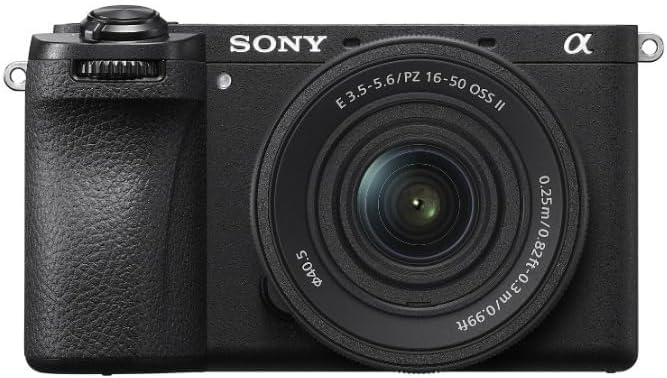
3. Sony Alpha 6700 – APS-C Interchangeable Lens Camera with 26 MP Sensor
- Brand: Sony
- Manufacturer: Sony
Overview: The Sony Alpha 6700 represents a higher tier of APS-C mirrorless capability with a 26 MP Exmor R back-illuminated sensor and dedicated AI processor for Real-time Recognition. It supports 4K/60p with 6K oversampling to 4:2:2 10-bit, plus 4K at 60p and up to 120p in Full HD. The included E PZ 16-50mm OSS II kit lens provides compact power zoom with optical stabilization, making this a compelling option for enthusiasts who want strong autofocus, fast shooting, and robust video functionality in a single, flexible package.
Performance-wise, the 6700’s AI-driven subject recognition, 759 AF points, and eye-tracking deliver reliable tracking across people, animals, and vehicles. The camera excels in fast action and video work due to 4K/60p with options for high-quality internal recording. Its dual sensor-shift image stabilization and a well-balanced control layout make it a versatile choice for hybrid shooters. The main caveats are the higher price point and slightly larger body than Canon’s entry-level options, which may impact portability for some travelers.
Pros
- 26 MP stacked BSI sensor with strong dynamic range
- AI Processor with Real-time Recognition and reliable AF
- 4K/60p with 10-bit upsampling options and 120p FHD
- In-body stabilization with the kit lens OSS II
- Excellent color science and Sony lens ecosystem
Cons
- Higher price relative to Canon entry models
- Menu and UI can be complex for beginners
- Battery life could be better in high-res modes

4. Sony Alpha a6400 Mirrorless Camera: Compact APS-C Interchangeable Lens Digital Camera with Real-Time Eye Auto Focus
- Brand: Sony
- Manufacturer: Sony
Overview: The Sony a6400 is a compact, proven performer with a 20.1 MP stacked sensor, 4K video, and Real-Time Eye AF. It features a highly capable AF system with 425 phase-detection and 425 contrast-detection points, plus a tilting LCD for vlogging and versatile shooting angles. The 6400’s autofocus, speed, and color rendering have made it a staple for enthusiasts and content creators seeking reliable performance in a compact body, particularly at a budget-friendly price point when bundled with the 16-50mm kit.
Performance-wise, the a6400 offers robust autofocus in both stills and video, with 11 fps continuous shooting and strong performance in mid-to-low light. The camera’s 4K video, though cropped in some modes, remains sharp with good color rendition, and the tilting screen makes it ideal for run-and-gun filming. While the sensor is not the latest generation, the combination of autofocus, speed, and Sony’s lens ecosystem keeps it competitive, especially for those who value reliable serviceability and resale value.
Pros
- Proven, reliable autofocus with Real-Time Eye AF
- Strong 4K video with crisp color and detail
- Compact, light body with a solid lens ecosystem
- Excellent value when bundled with the 16-50 kit
- High-speed 11 fps shooting
Cons
- Older sensor generation compared to newer Sony bodies
- No in-body stabilization (stabilization relies on lenses)
- Some users find menu navigation less intuitive
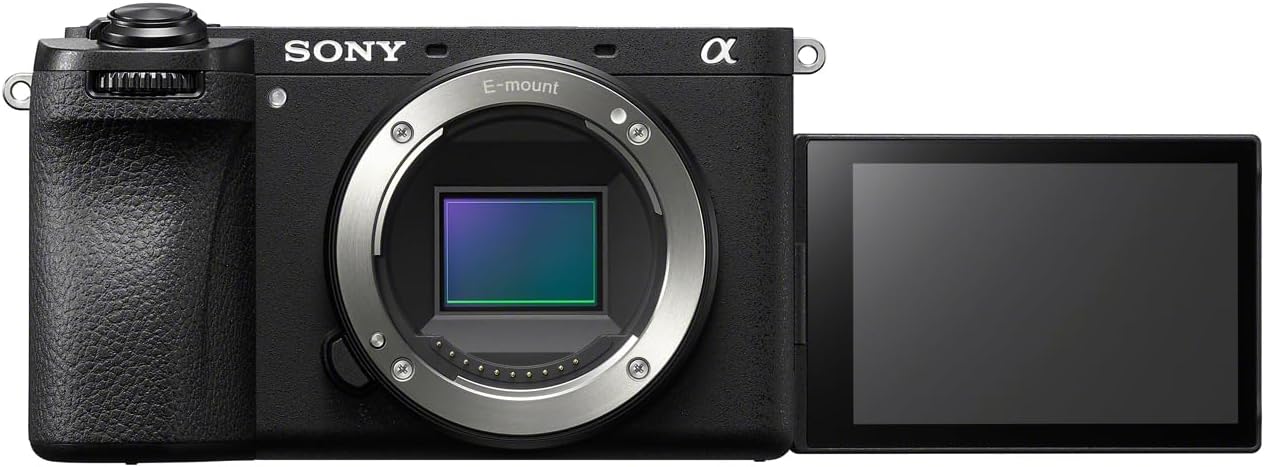
5. Sony Alpha 6700 – APS-C Interchangeable Lens Camera with 26 MP sensor
- Brand: Sony
- Manufacturer: Sony
Overview: This 6700 variant matches the earlier kit but is positioned as a premium option with similar core specs, including 26 MP, AI subject recognition, 4K/60p, and 120p FHD. The key differentiators here are build quality, handling refinements, and potential access to higher-end software features. The 6700’s performance remains strong for both stills and video, with robust autofocus and excellent subject tracking, making it suitable for more demanding shooters who want advanced capabilities in a compact body.
In practice, the premium 6700 kit offers a strong balance of speed, stabilization, and image quality, with a 1.16 lb body weight and 1.07x viewfinder magnification. Continuous shooting at 11 fps, 26 MP resolution, and 4K/60p with high-quality color and detail make it an appealing option for serious enthusiasts and pro-am photographers. The caveat is the higher price, which may push buyers toward the Sony A6700 body-only or other brands if budget is a constraint.
Pros
- Premium handling and small-bodies sense for pros
- AI subject recognition and 26 MP sensor
- 4K/60p with 6K oversampling and 10-bit options
- Strong continuous shooting at 11 fps
- Excellent battery life and build quality for long shoots
Cons
- Highest price among the reviewed options
- Premium features require careful budget planning
- Still relies on lens-based stabilization to maximize benefit
Frequently Asked Questions
We’ve compiled answers to the most common questions about aps-c camerass to help you make an informed decision.
Conclusion
Choosing the right aps-c cameras can truly enhance your game.
It offers convenience and makes walking the course easier. With various options available, it’s important to consider your needs.
Think about the cart’s weight, stability, and storage features. A good push cart can save you energy..