Here’s an overview of the Best Generators that we’ll explore today:
Inverter and portable generator technology has evolved to deliver cleaner power, better efficiency, and smarter safety features for both home backup and outdoor use. With power reliability more critical than ever—whether for blackout resilience, camping, or RV living—consumers expect quiet operation, fuel flexibility, and built-in protection. This review uses a consistent methodology: evaluating each model on power output (rated and peak), fuel type flexibility, noise, runtime at common loads, safety features (CO sensors, overload protection), starting methods, portability, warranty, and real-world usability (ease of use, maintenance, and accessories). The analysis covers five models across five brands represented in the dataset: Redact, Powermate, Honda, Jackery, and Pulsar, focusing on 5000W-class inverter capabilities, open-frame gas generators, and portable lithium-based options where applicable. The products surveyed range from dual-fuel 5000W inverter generators suitable for home backup and RV use to compact, lightweight alternatives for camping and off-grid power needs.
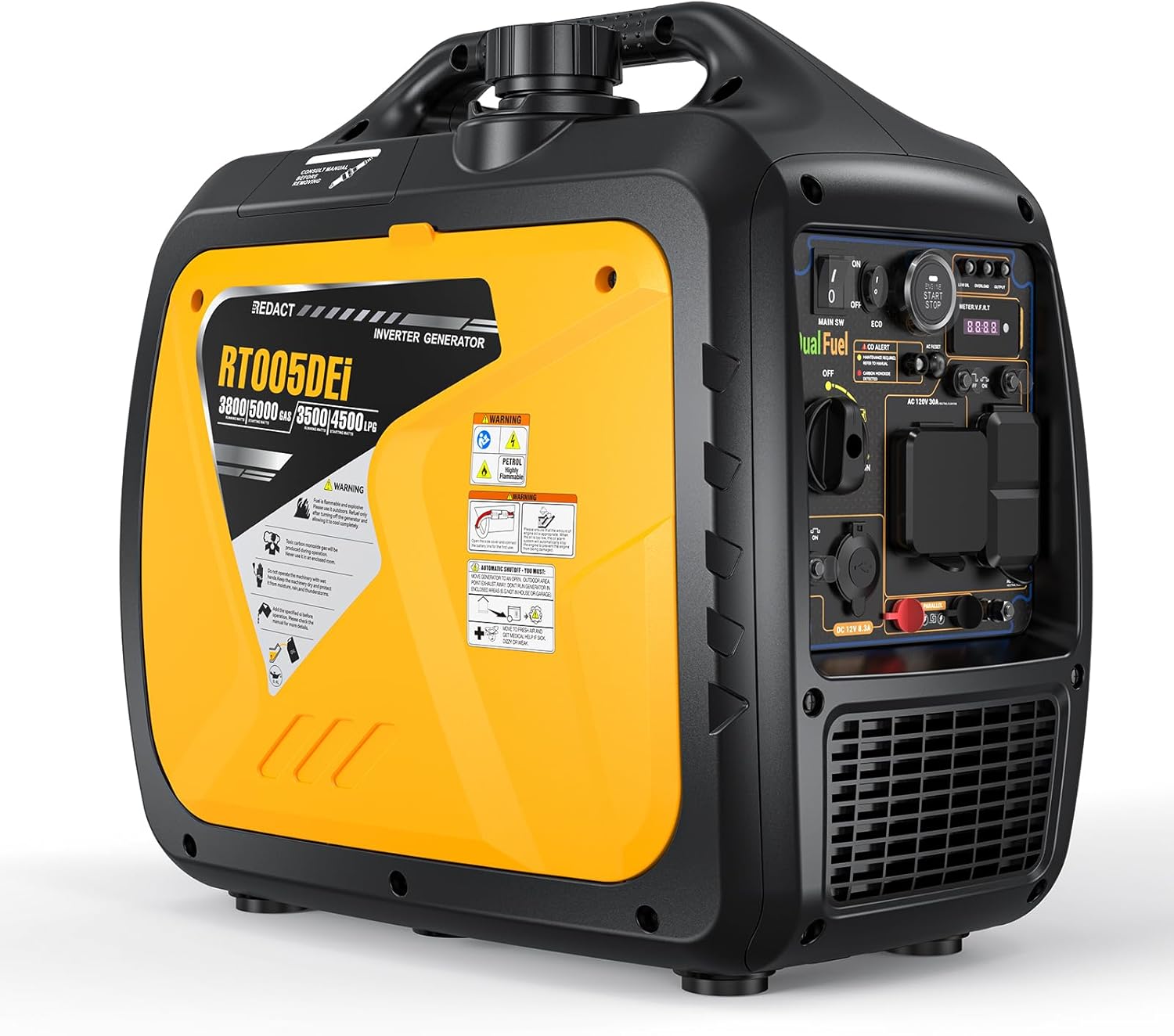
1. 5000 Watts Portable Dual Fuel Inverter Generator– Small Gasoline LPG Powered for Home Backup
- Brand: Redact
- Manufacturer: Redact
Overview: This dual-fuel inverter generator from Redact delivers up to 5000W peak and 3800W running on gasoline, or 4500W peak and 3500W running on propane, with dual-fuel flexibility and multiple start modalities (recoil, electric, remote). It includes a CO sensor for automatic shutdown, a 60-lb class portable form factor, and parallel capability to reach up to 7200W peak when paired with another unit. The 174cc engine and 1.8-gallon tank offer modest runtime at low loads (about 7.5 hours at 25% load), and the package ships with essential accessories like a propane hose/regulator and maintenance tools. The unit emphasizes safety and expandability, making it a strong option for RVs, home backup, or tailgating where clean power is critical.
Performance-wise, the dual-fuel design broadens fuel availability, but propane generally yields fewer watts than gasoline, which is reflected in the spec sheet. The inverter technology should deliver stable 120V 20A/30A outputs with reduced surges, important for sensitive electronics. In practice, the CO sensor and overload protection enhance peace of mind during extended use, while parallel capability is a real-world benefit for higher-demand scenarios like powering multiple appliances or charging systems simultaneously. However, with a 60-pound weight and a relatively small 1.8-gallon tank, long runtimes at higher loads will require fuel management or supplemental units. The warranty is modest at 1 year, which may be a consideration for long-term ownership.
Pros
- Dual-fuel versatility (gasoline or propane).
- 5000W peak/3800W running on gas with parallel capability.
- CO sensor with automatic shutdown for safety.
- Multiple start methods (recoil, electric, remote).
- Includes propane hose, regulator, and basic maintenance tools.
Cons
- Relatively small fuel tank limits runtime at higher loads.
- 1-year warranty may be shorter than some competitors.
- Heavier for a portable unit at ~60 lbs.
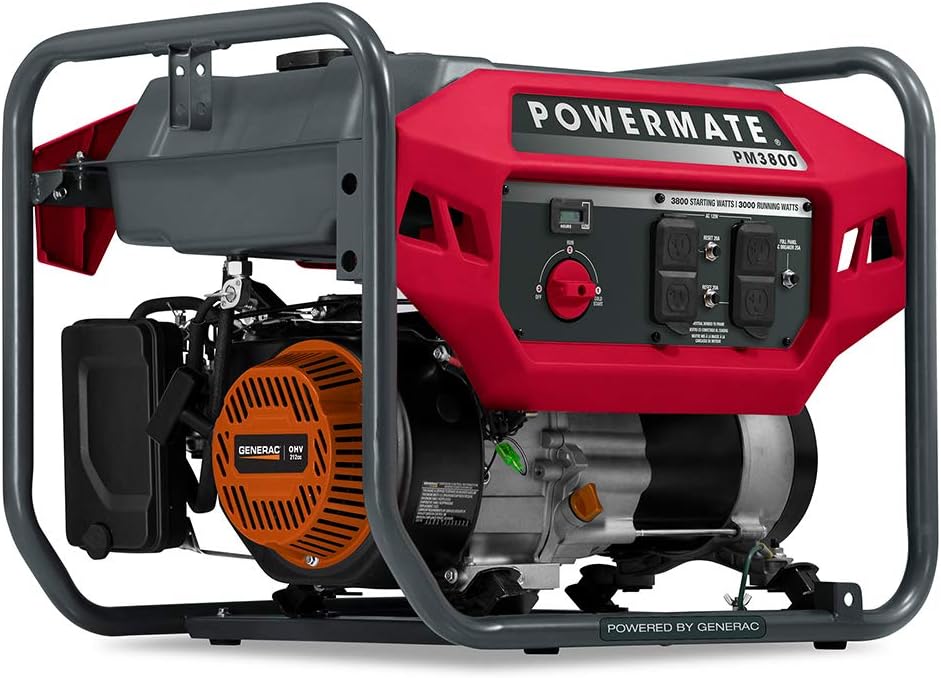
2. Powermate PM3800 3
- Brand: Powermate
- Manufacturer: Powermate
Overview: Powermate PM3800 is presented as a gas-powered portable inverter with 3,800 running watts on gasoline and a 21-hour runtime at 25% load thanks to a 5-gallon tank and a robust 212cc Generac-derived engine. Although labeled with a 3800W running wattage, its open-frame design and 4-outlet configuration position it as a practical option for camping, job sites, and light home backup. Features include a Powerdial starting system, low-oil shutdown, and a fuel gauge. The build emphasizes durability and straightforward operation, with a design that prioritizes portability despite its near-96-pound weight class.
In use, the PM3800 offers extended runtime and a traditional recoil start with easy-to-read controls. The automatic safety features (low-oil shutdown, covered outlets, fuel gauge) support reliable operation in remote settings. However, as an open-frame generator, noise levels and vibration may be more noticeable than compact inverter units, and the specification indicates a 3000W continuous output with a 3800W starting capacity rather than the full 3800W running across all loads—clarity on peak vs. running watts helps in planning. The weight and bulk reduce portability compared to lighter inverter options, but the long runtime at moderate loads makes it attractive for campground or tailgate use.
Pros
- Long runtime with a 5-gallon tank (up to 21 hours at 25% load).
- Powerdial simplifies starting and operation.
- Fuel gauge and covered outlets protect connections.
- Open-frame design offers robust construction.
- 4 outlets provide flexibility for multiple devices.
Cons
- Open-frame design may be louder and less ideal for quiet uses.
- Heavier at ~95.8 pounds, reducing portability.
- Wattage specs may be confusing between running vs starting watts.
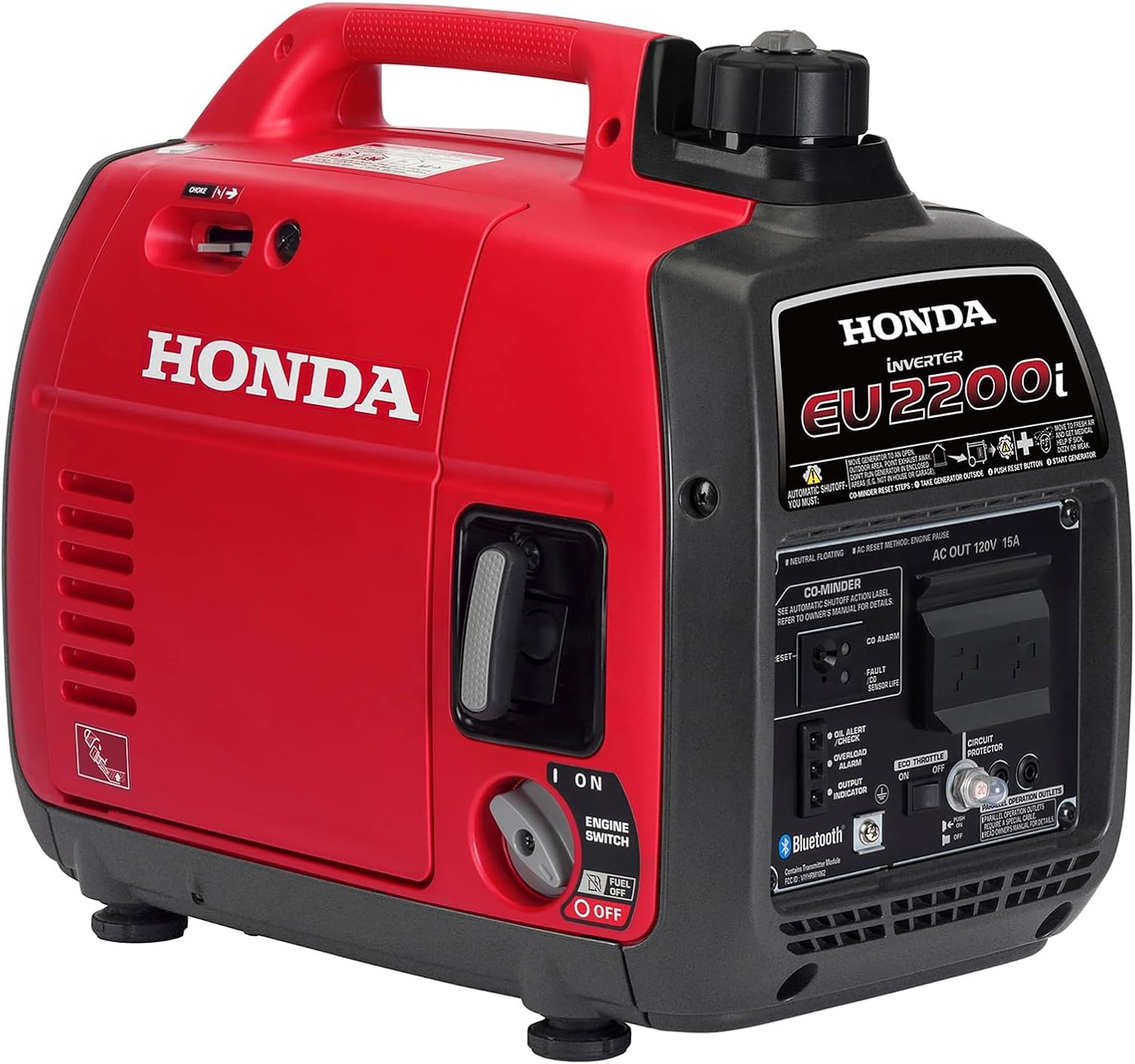
3. Honda 664240 EU2200i 2200 Watt Portable Inverter Generator with Co-Minder
- Brand: Honda
- Manufacturer: Honda
Overview: Honda’s EU2200i is a staple in portable inverter power, delivering 2200W peak and 1800W running with inverter-stable output, renowned quiet operation (48-57 dBA), and Eco Throttle for fuel efficiency. The model supports parallel operation with a second unit for up to 4400W, making it a scalable option for campers and RV users seeking quiet, clean power in small loads. It’s notably light at ~46.5 pounds and uses Honda’s reliable inverter technology to deliver stable power for sensitive electronics.
In real-world usage, the EU2200i shines for sound-sensitive environments like campsites and late-night use where noise is a priority. The Eco Throttle system helps extend run times, and Honda’s build quality translates to low maintenance and strong resale value. The 0.95-gallon tank translates to several hours of operation depending on load, but this unit is designed for modest power needs rather than high-wattage appliances. Paralleling with another EU2200i is straightforward with an optional cable, making it a practical pair for greater output without sacrificing portability.
Pros
- Excellent quiet operation (as low as 48 dBA).
- Reliable Honda inverter technology for clean power.
- Parallel capability with another unit for up to 4400W.
- Lightweight and portable for its class.
- Strong fuel efficiency with Eco Throttle.
Cons
- Limited single-unit output (2000-2200W range) for larger loads.
- Tank size modest at 0.95 gallons, limiting runtime at higher loads.
- Price not disclosed in dataset; can be a premium within its class.
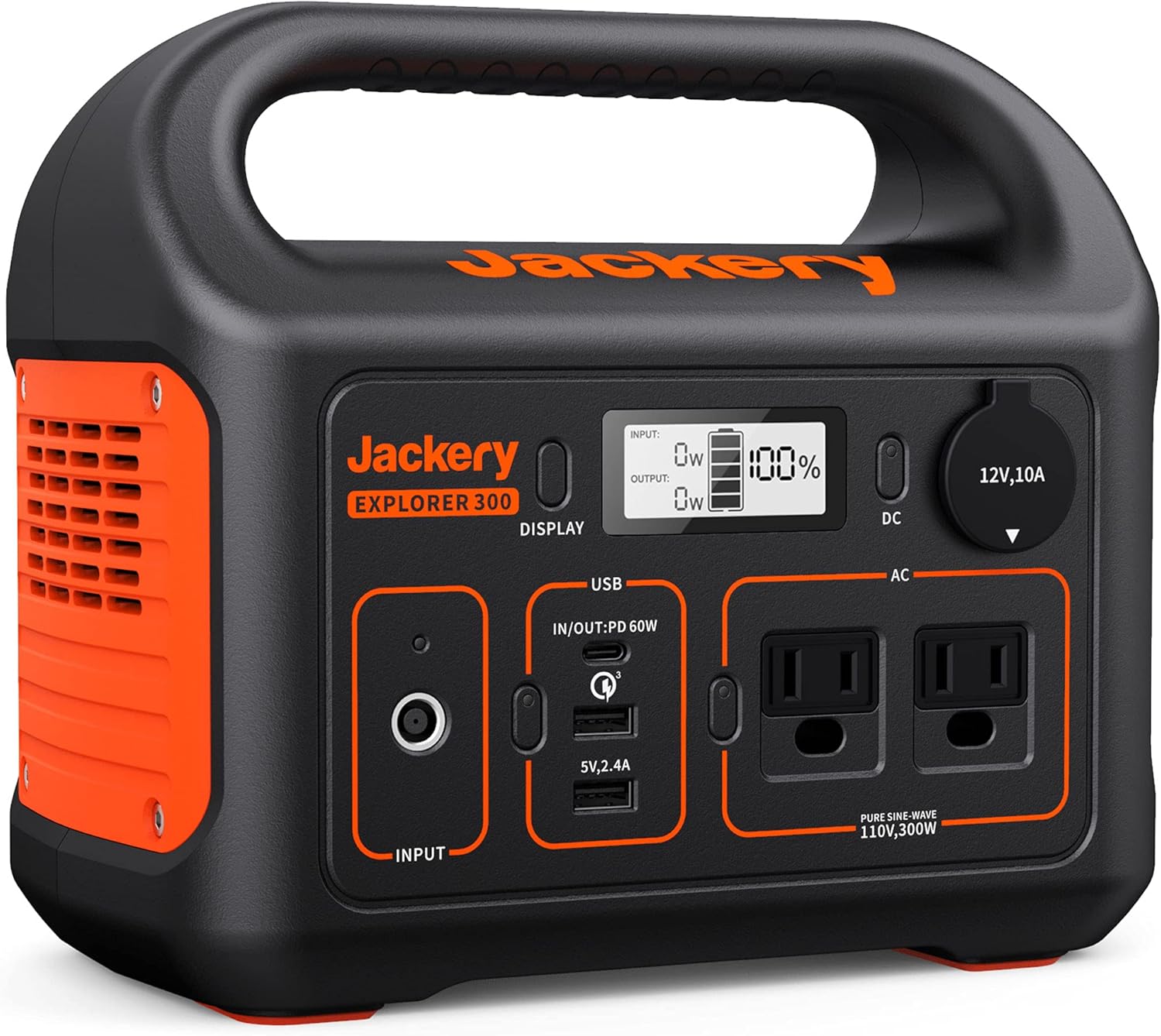
4. Jackery Portable Power Station Explorer 300
- Brand: Jackery
- Manufacturer: Jackery
Overview: Jackery Explorer 300 is a compact lithium-based portable power station aimed at camping, travel, and off-grid use. It delivers 300W continuous AC output from two Pure Sine Wave outlets, with a total energy capacity of 293Wh and multiple ports (PD USB-C, USB-A, DC car port). The unit is incredibly light at 7.1 pounds and supports rapid charging (AC input and 60W USB-C PD). It is designed for silent operation, no fuel, and silent charging with solar compatibility via Jackery SolarSaga panels.
Performance-wise, the Explorer 300 excels at charging small electronics, laptops, cameras, drones, and light-powered devices without noise. It can be recharged quickly from wall power or car, and solar compatibility enables off-grid setups when paired with the SolarSaga 100. While it cannot power high-wattage appliances (e.g., air conditioner or large power tools), the unit’s light weight, compact size, and modular nature (expandable with solar and higher-capacity models) make it ideal for weekend trips or emergency charging. Its user experience is highly approachable for non-technical users and those prioritizing portability and clean energy.
Pros
- Very lightweight and portable.
- Quiet operation with Pure Sine Wave output.
- Multiple charging options including PD USB-C and solar compatibility.
- Fast recharge capability (2 hours to 80% at wall, 60W PD for fast charging).
- Excellent for charging small electronics and devices.
Cons
- Limited continuous power (300W) and energy capacity (293Wh).
- Not suitable for high-wattage appliances or run-time-intensive loads.
- Solar panel not included in base package.
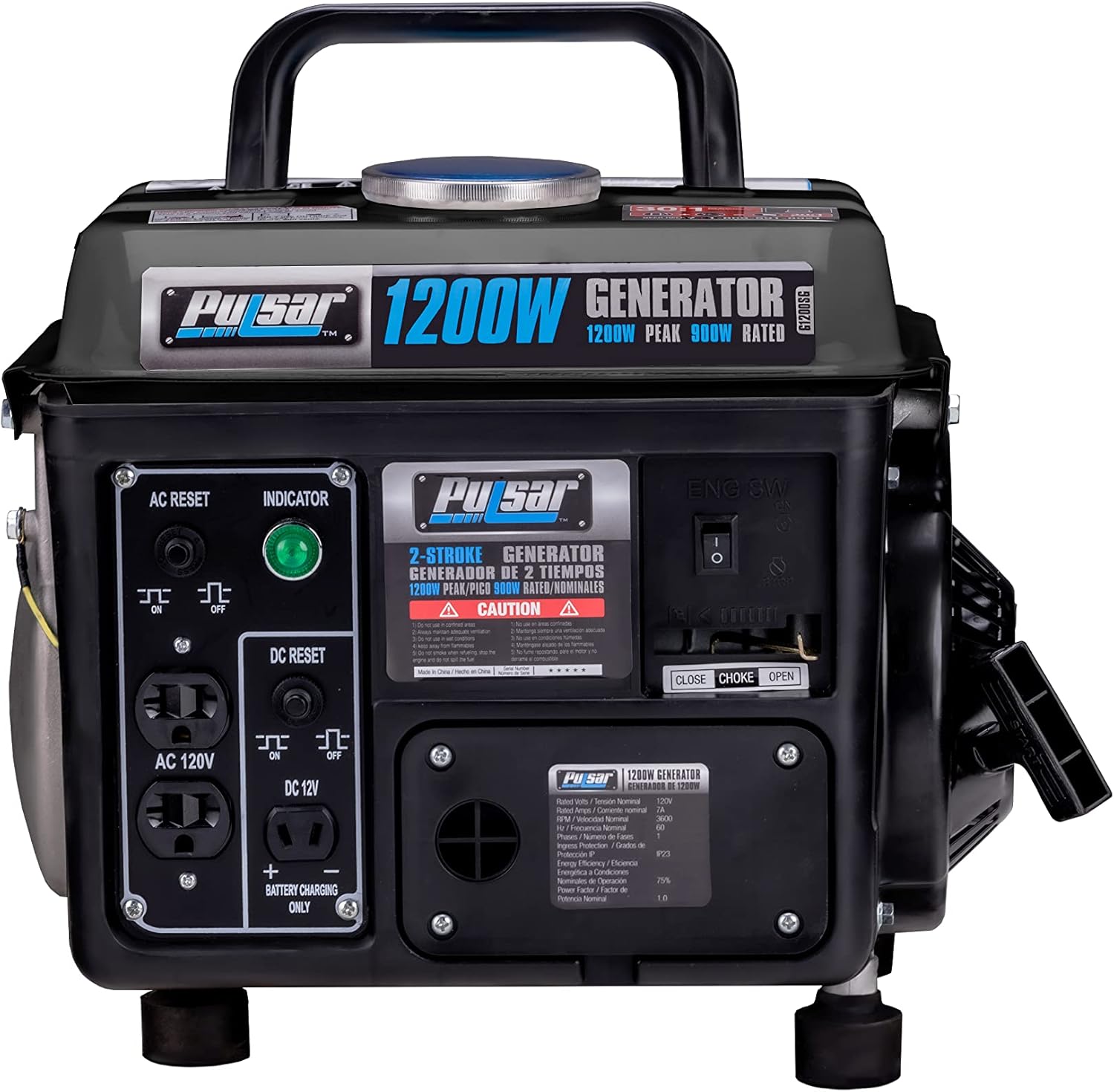
5. Pulsar G1200SG 1
- Brand: Pulsar
- Manufacturer: Pulsar
Overview: Pulsar G1200SG is a compact, 1200W peak/900W running gas generator with a carrying handle designed for portability. Its 69cc two-stroke engine and 1.1-gallon tank aim at light camping and tailgating use, with a two-outlet configuration for basic tools and devices. The unit emphasizes portability and quick-start capability, targeting users who need a budget-friendly, simple power source for small loads.
In practical terms, the G1200SG provides a straightforward, low-cost solution for basic power needs—camping lights, small coolers, or charging devices. Two-stroke engines are typically lighter but louder and less fuel-efficient than comparable four-stroke designs, and emissions considerations apply. Runtime will be relatively short at higher loads, and the absence of advanced safety features like a CO sensor means users should be cautious about ventilation and continuous operation indoors. For occasional, light-duty power, it is a cost-effective option.
Pros
- Compact, light, and highly portable.
- Low upfront cost among listed options.
- Simple operation with carrying handle.
- Good for basic camping and tailgating needs.
Cons
- Two-stroke engine generally noisier and less efficient.
- Limited runtime and power output (900W running).
- Lack of advanced safety features (no CO sensor) and fewer protective features.
Frequently Asked Questions
We’ve compiled answers to the most common questions about generators 2025s to help you make an informed decision.
Conclusion
.
.
Final thoughts here.