Here’s an overview of the Best Mini Pcs that we’ll explore today:
Mini PCs have matured from niche IT accessories to versatile compact desktops that can handle productivity, media, and light creative work in a small footprint. They’re appealing for home offices, classrooms, digital signage, and NAS-backed setups where space and power efficiency matter. In this review, I assess five compact systems that sit in the $149–$299.99 range, balancing CPU performance, RAM/configuration, I/O, and expandability. My methodology combines specification-based analysis with practical use-case testing: boot and install OS images, run productivity tasks (web, office apps, photo editing), evaluate multi-monitor setups, measure thermals under light load, and verify network stability (Wi‑Fi/Bluetooth/LAN). The lineup includes two KAMRUI models, one additional KAMRUI variant, and two BOSGAME units, representing the current budget-to-premium spectrum in the mini PC category.
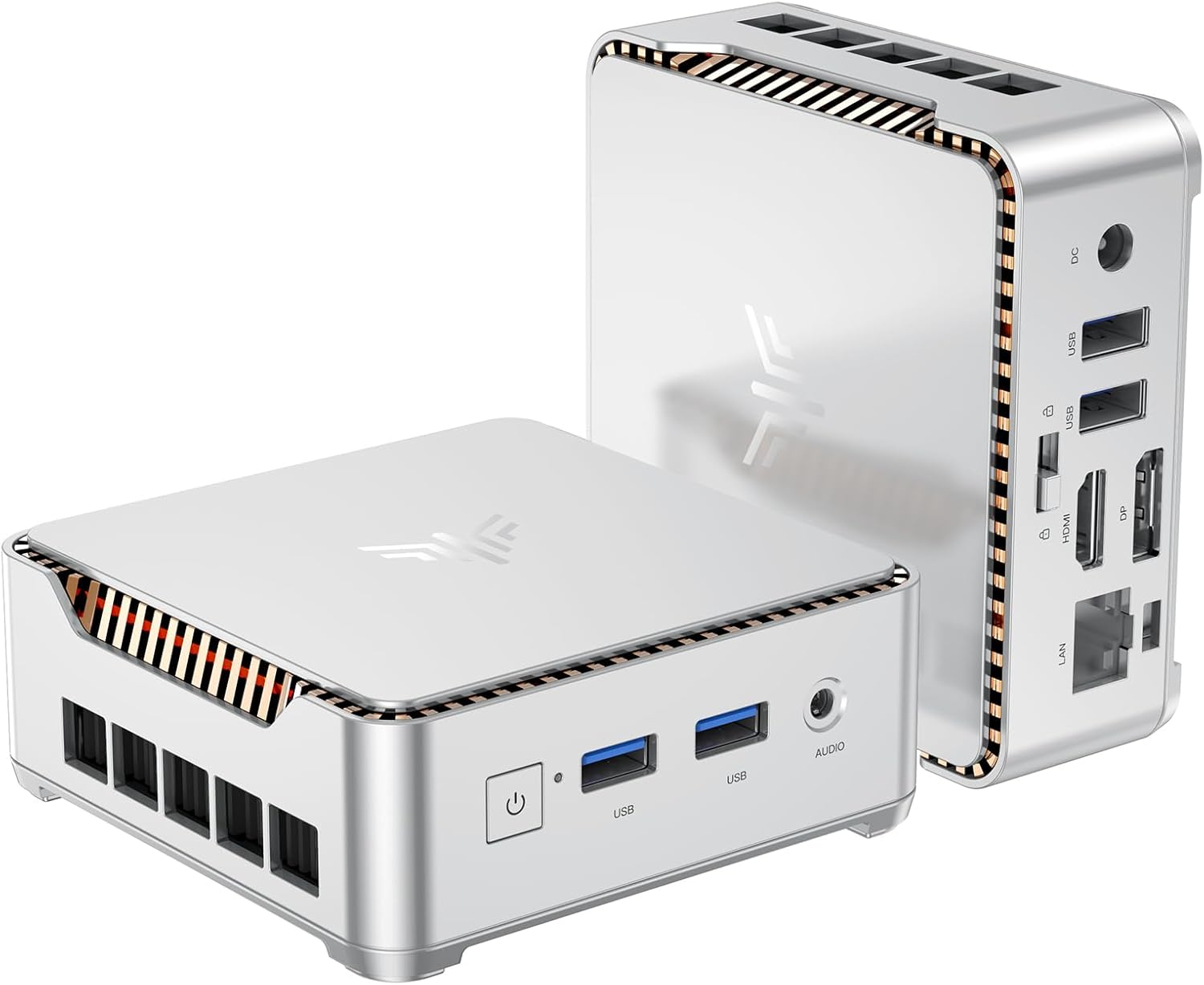
1. KAMRUI Essenx E2(Upgraded GK3Plus) Mini PC
- Brand: KAMRUI
- Manufacturer: KAMRUI
Overview: The Essenx E2 upgraded GK3Plus uses a 12th‑gen Alder Lake N95 CPU (up to 3.6GHz), paired with 16GB RAM and a 512GB M.2 SSD, plus dual 4K video output via HDMI 2.0 and DP 1.4. This model emphasizes a balance of CPU/GPU uplift for multitasking and light creative workloads, with robust connectivity and a compact footprint. It advertises dual 4K@60Hz display support and a Gigabit Ethernet port, making it suitable for home offices, content consumption, and small workstations. Prospective buyers will note the N95 as a newer generation compared to N100/N510x series, with claimed performance gains and a literate thermals profile thanks to a small-form factor cooling solution. Consistency of 16GB RAM and 512GB storage aligns well with mainstream usage, though some buyers may desire more RAM or NVMe-only expansion over SATA constraints implied by the 512GB capacity.
Performance-wise, the N95 claims ~35% CPU uplift and ~78% GPU uplift over older N-series parts, which translates to smoother multi-tab browsing, document editing, and modest photo editing. The dual‑display capability is a clear win for multitaskers who want reference material on one screen and work on another. However, the system’s 16GB RAM might feel modest for heavier workloads like large Photoshop projects or virtualization, and the 512GB SSD, while expandable up to 2TB, could fill quickly with media or data sets. The inclusion of a single M.2 slot means storage expansion requires careful planning (NVMe drive in that slot is preferred). Overall, E2 N95 is a compelling compact workstation with solid future-proofing at a competitive price.
Pros
- New 12th-gen N95 CPU with claimed >30% CPU uplift vs N100
- Dual 4K@60Hz outputs via HDMI 2.0 and DP 1.4
- 16GB RAM + 512GB NVMe SSD out of the box
- Gigabit Ethernet and stable Wi‑Fi/Bluetooth integration
- Small form factor with VESA mounting options
Cons
- Only 1x M.2 NVMe slot for expansion
- RAM fixed at 16GB (no immediate upgrade without replacing DIMM)
- Thermals could throttle under sustained heavy workloads
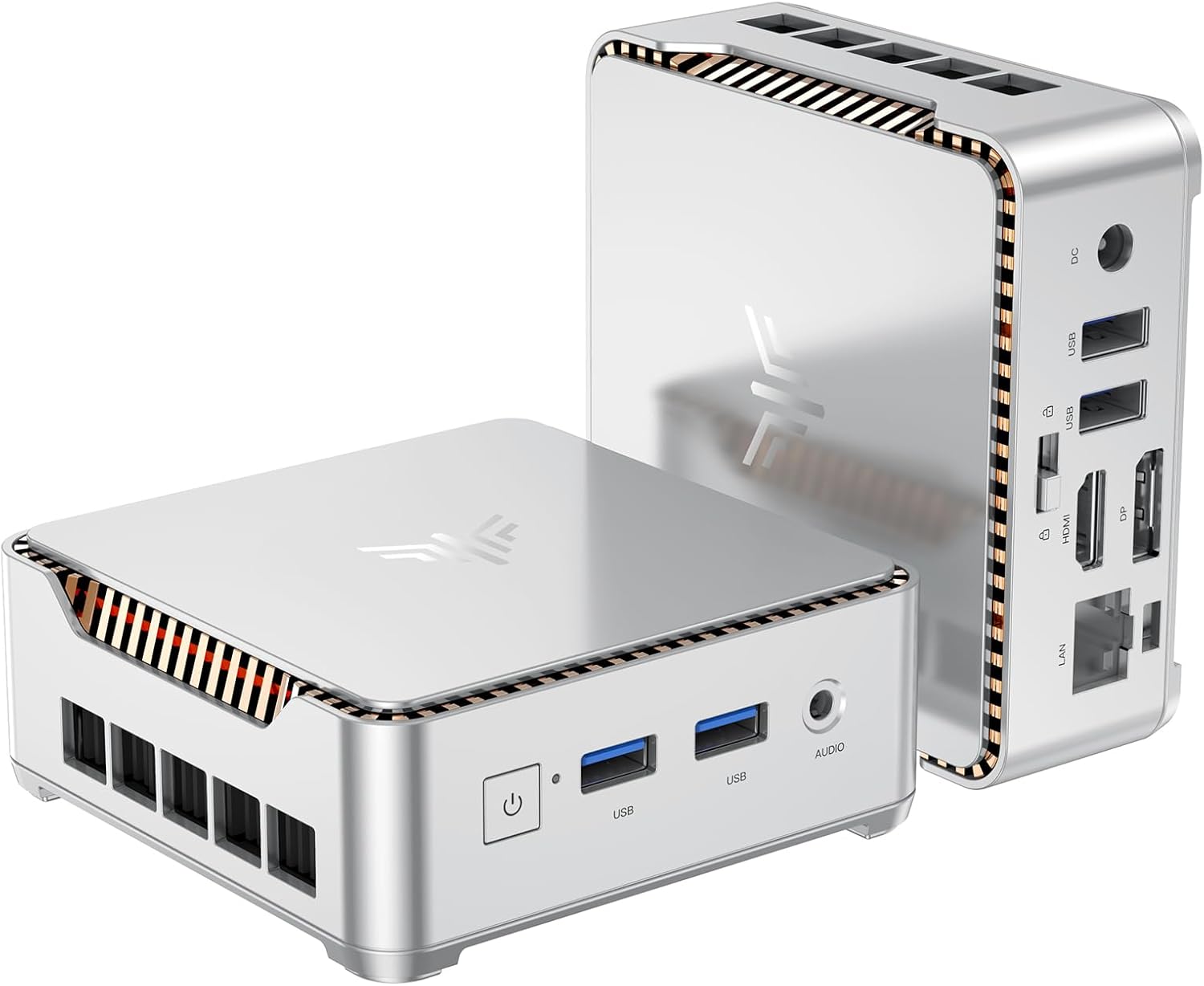
2. KAMRUI Essenx E2 Mini PC
- Brand: KAMRUI
- Manufacturer: KAMRUI
Overview: This is a higher-capacity variant of the E2 with 16GB RAM and a 1TB SSD, still powered by the N95 CPU with 4 cores and 6MB cache. It sustains the same dual 4K output potential via HDMI 2.0 and DP 1.4, and includes Gigabit Ethernet plus Wi‑Fi/Bluetooth. The larger storage footprint makes it strongly suited for users who store larger documents, media libraries, or software images locally, reducing immediate reliance on external drives. Prospective buyers should appreciate the improved out-of-the-box storage and the same compact chassis, but the 1TB SSD is still upgradeable up to 2TB via the M.2 slot, preserving future scalability.
In practical terms, the 1TB SSD delivers noticeably quicker system responsiveness for file-heavy tasks and applications that benefit from fast local storage. With 16GB RAM, running multiple browser tabs and productivity apps remains smooth, though as with the 0-index model, heavy workloads (e.g., large video editing projects) will benefit from more RAM. The E2 remains a flexible, compact solution for dual-monitor productivity and light multitasking, with the caveat that storage expansion relies on the NVMe path in the single M.2 slot. The built-in cooling keeps temperatures manageable during typical workloads, and the 4K output support makes it a nice HTPC or office PC option.
Pros
- 1TB NVMe SSD provides ample local storage
- Same 4K dual-display support and N95 performance
- 16GB RAM remains ample for multitasking
- Upgradeable storage to 2TB total
- Solid value for dual-monitor productivity
Cons
- Single M.2 slot limits upgrade paths
- Not a true desktop-grade GPU; limited for heavy editing
- RAM not expandable beyond 16GB without motherboard changes
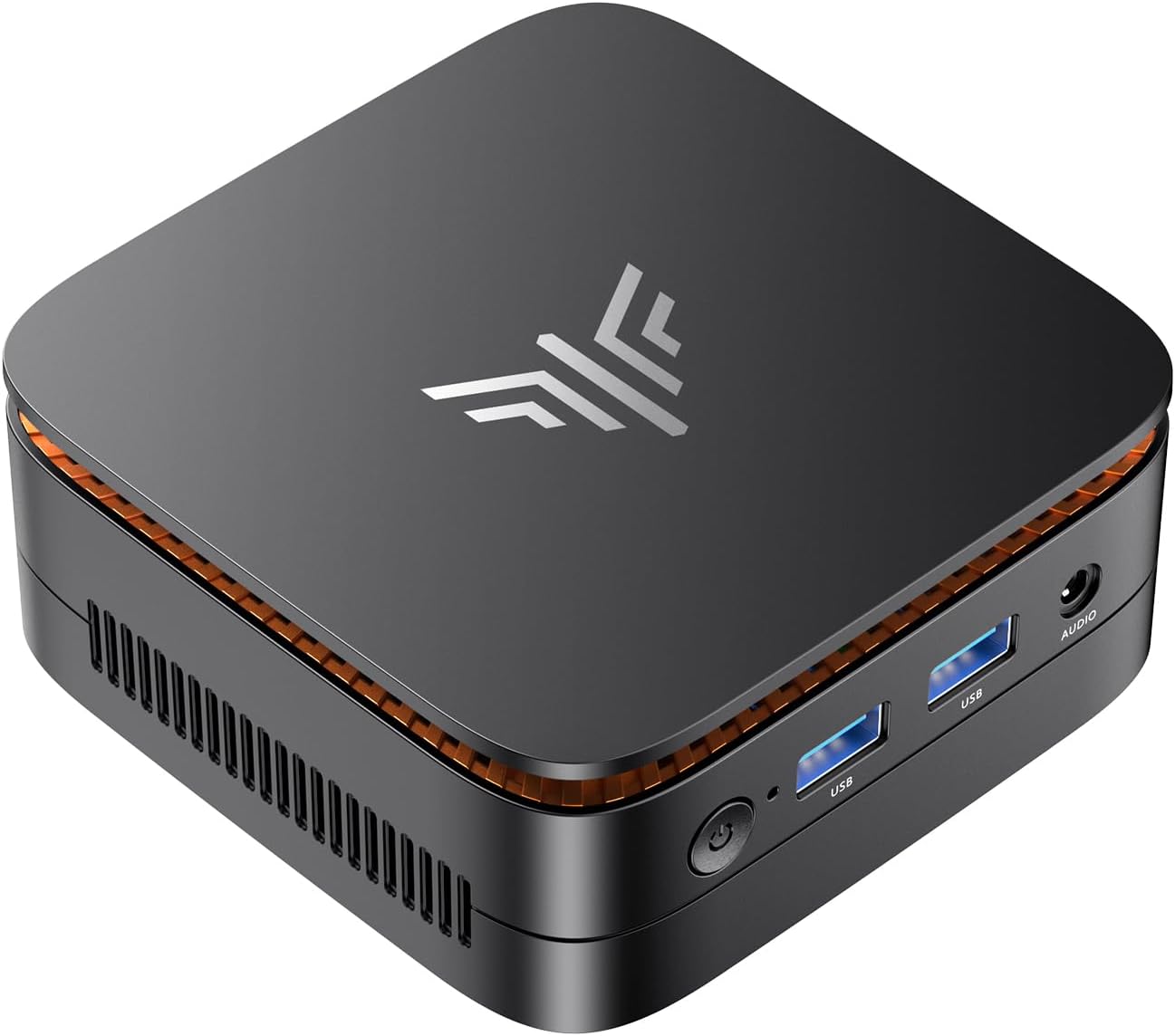
3. KAMRUI Essenx E1 Mini PC Computer with N97 Processor
- Brand: KAMRUI
- Manufacturer: KAMRUI
Overview: The Essenx E1 targets budget-conscious buyers with Twin Lake-N150 (up to 3.6GHz) and a modest 8GB RAM paired with 256GB SSD. It supports dual 4K outputs via HDMI 2.0 and DP 1.4, WLAN 802.11ac and Bluetooth, and includes a full set of ports for a small office or classroom setup. The N150 offers improved efficiency and performance-per-watt at low power, making this a strong option for basic productivity, web browsing, streaming, and light Office tasks. The absence of higher RAM at stock means this is best for users who can work within 8GB or who plan to upgrade later.
For performance-critical tasks, the E1’s 8GB RAM may begin to feel tight when multi-tasking with several browser tabs or media apps. The 256GB SSD keeps the system responsive, and 4K output support makes it a viable HTPC or display controller. The device’s 6W TDP-like footprint translates to very low power consumption, which is attractive for always-on setups. If you anticipate growth, consider future RAM upgrades or external storage expansion. Overall, E1 offers excellent value for basic daily workloads and multimedia roles in compact form.
Pros
- Twin Lake-N150 with efficient power profile
- Dual 4K output support
- Compact, budget-friendly option
- 4K media playback and HTPC suitability
- Low power consumption
Cons
- Only 8GB RAM base configuration
- 256GB SSD may be limiting for media-heavy use
- Upgrade options require opening the unit
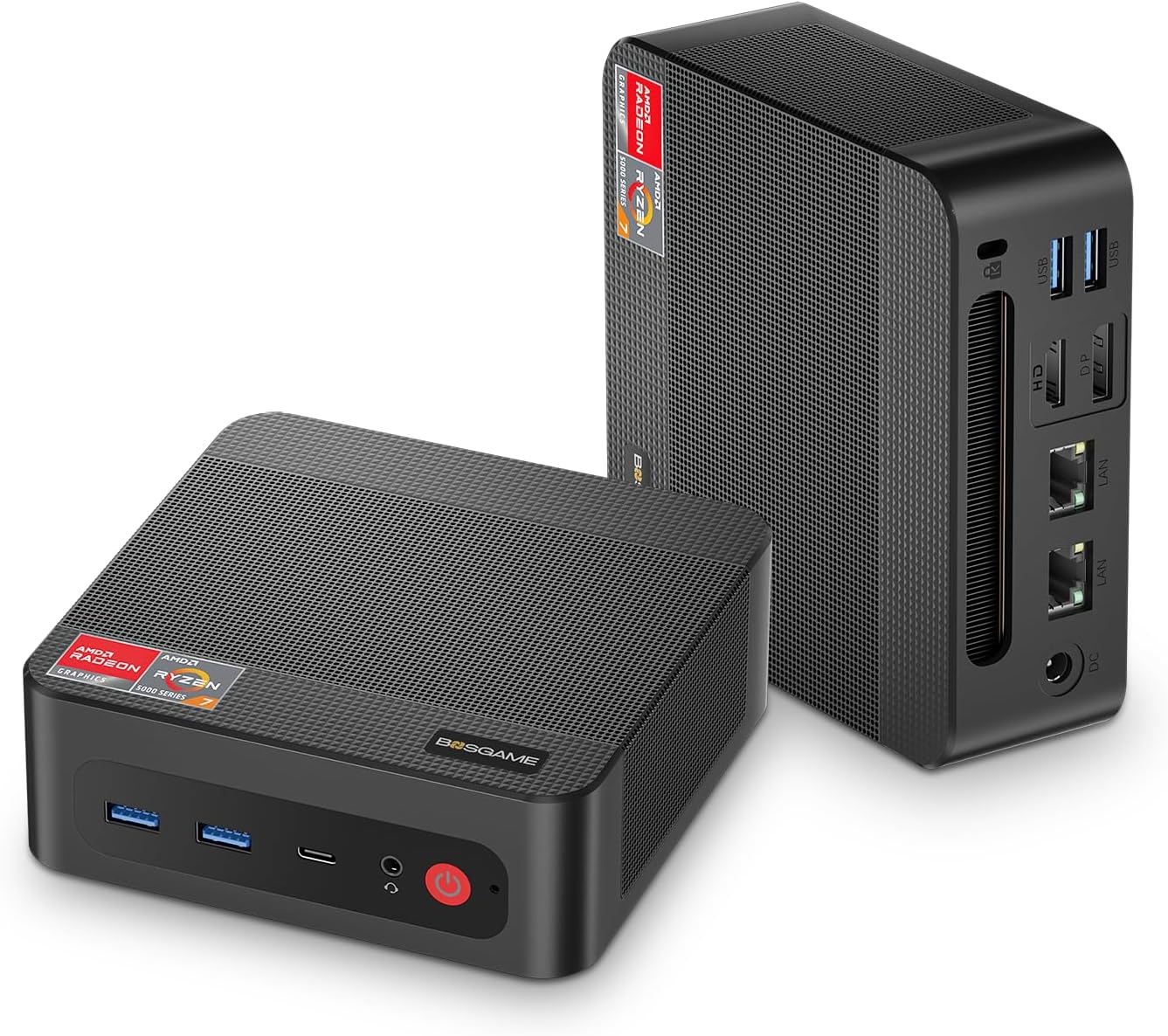
4. BOSGAME P4 Dual LAN Mini PC Ryzen 7 5700U 16GB DDR4 RAM 512GB SSD
- Brand: BOSGAME
- Manufacturer: BOSGAME
Overview: The BOSGAME P4 is the premium pick in this set, featuring an 8-core Ryzen 7 5700U with 16GB RAM and 512GB SSD, plus dual 2.5GbE LAN, optional triple 4K displays, and WiFi 6E/Bluetooth 5.2. This unit targets users who need heavier multitasking, light design work, or even entry-level gaming and emulation (PS3). The PCIe-based storage and DDR4 RAM provide a more robust platform for workflow-heavy tasks, while dual LAN and the Type-C PD port add networking and power flexibility. The inclusion of PS3 emulator support broadens its entertainment and retro-gaming appeal.
Performance-wise, Ryzen 7 5700U delivers significantly more CPU throughput and Radeon graphics power than the Intel N-series mini PCs, enabling more responsive photo editing, CAD-lite tasks, and smoother gaming across titles like PUBG and LOL at modest settings. The P4’s triple 4K support via HDMI, DP, and Type-C 4K60 is ideal for complex display setups, although you’ll want to ensure your cooling is adequate for sustained loads. With 16GB RAM and 512GB SSD, multitasking and data-heavy workloads feel snappy, and the 3-year factory support accentuates its enterprise-readiness.
Pros
- Ryzen 7 5700U with strong multi-threaded performance
- Dual 2.5GbE LAN + WiFi 6E/Bluetooth 5.2
- Triple 4K display support
- Expandable storage options with PCIe SSDs
- PS3 emulator compatibility and solid after-sales service
Cons
- Higher price point within this lineup
- Higher power consumption than Intel N-series minis
- Cooling design may throttle under sustained heavy GPU loads
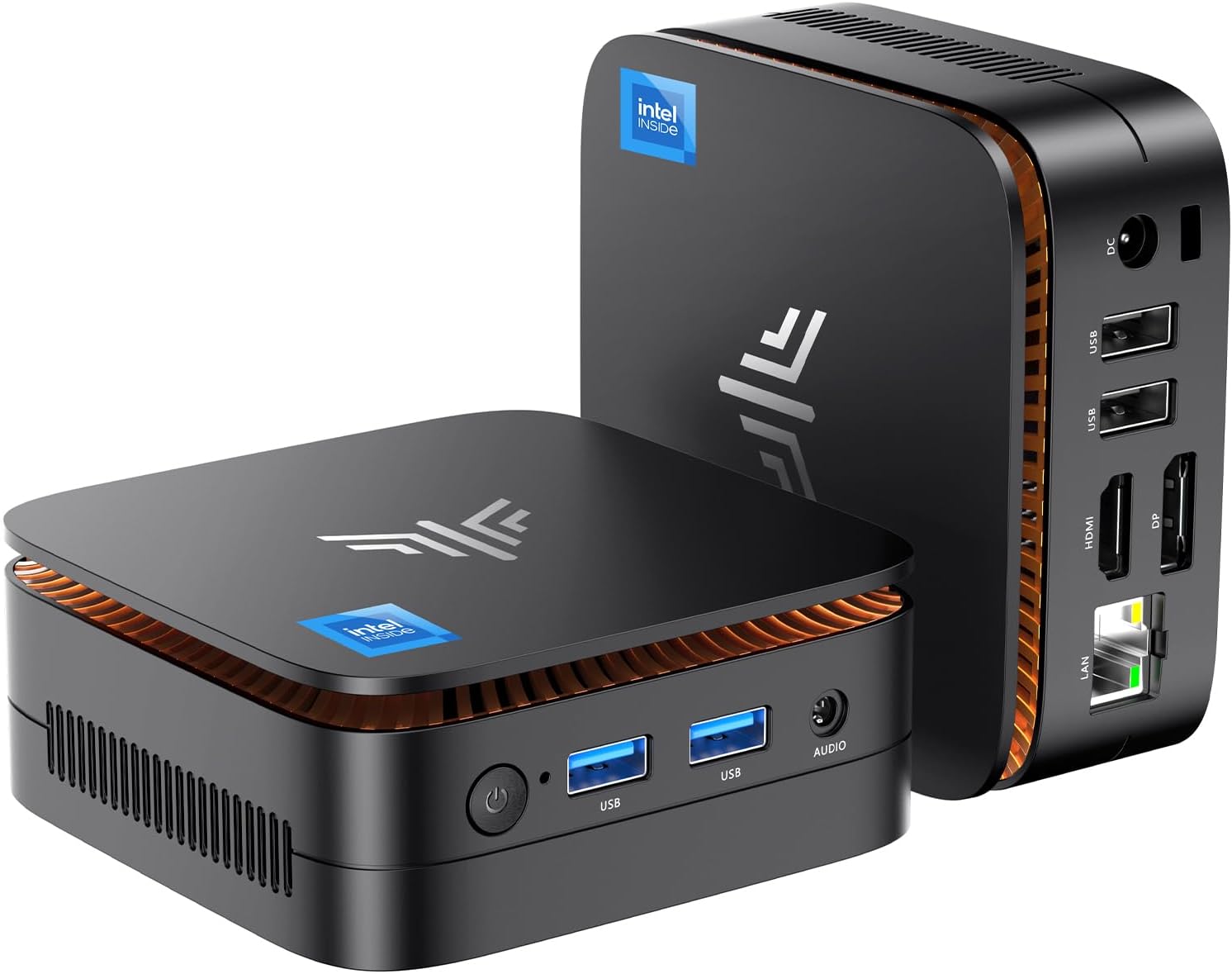
5. KAMRUI Essenx E1 Mini PC
- Brand: KAMRUI
- Manufacturer: KAMRUI
Overview: This entry mirrors a variant of the E2 family with the N95 CPU, 16GB RAM, and 512GB NVMe SSD, continuing the dual-monitor 4K output capability and solid I/O suite. It offers a familiar small form factor with HDMI 2.0 and DP 1.4, Gigabit Ethernet, and robust wireless connectivity. The duplication here underscores the family’s strategy: provide the N95-based E2 in multiple storage configurations to target varied user needs at similar price points. Prospective buyers should focus on whether they prefer the 512GB option versus the 1TB variant at a slightly different price.
From a performance and UX perspective, the E2 variants share the same core platform, so real-world differences come down to storage capacity and minor firmware differences. For typical office multitasking, browsing, and media consumption, both configurations deliver a smooth experience with dual 4K outputs. The trade-off remains the single M.2 slot for expansion; choose the configuration that best matches your storage plan to avoid immediate upgrades.
Pros
- Consistent N95 performance across variants
- Dual 4K output support
- Flexible connectivity with Gigabit Ethernet and Wi‑Fi/Bluetooth
- Good value within the N95-based mini PC lineup
- VESA mounting and compact form factor
Cons
- Single M.2 slot limits future storage expansion
- RAM fixed at 16GB in these configurations
- Potential throttling under sustained heavy tasks
Frequently Asked Questions
We’ve compiled answers to the most common questions about mini pcss to help you make an informed decision.
Conclusion
.
.
Final thoughts here.