Here’s an overview of the Best Oled Monitors that we’ll explore today:
OLED gaming monitors have shifted from niche luxury to mainstream staples for enthusiasts seeking instant response, perfect blacks, and vivid color. The category covered here spans 27-inch QHD panels with 240 Hz refresh rates and ultra-fast GtG response times, drawing comparisons across AOC, ASUS, Samsung, and LG. Our methodology combines lab-verified observations, real-world gaming scenarios, and a breakdown of key specs that matter most to gamers and content creators: panel technology (QD-OLED vs WOLED), brightness stability, burn-in safeguards, heat management, input lag, color accuracy (DCI-P3 coverage), and feature ecosystems (G-SYNC/FreeSync compatibility, HDR certification, and user-adjustable brightness controls). We tested each model across fast-paced FPS titles, cinematic games with HDR, and productivity tasks to illuminate trade-offs between response, color volume, and long-term reliability.
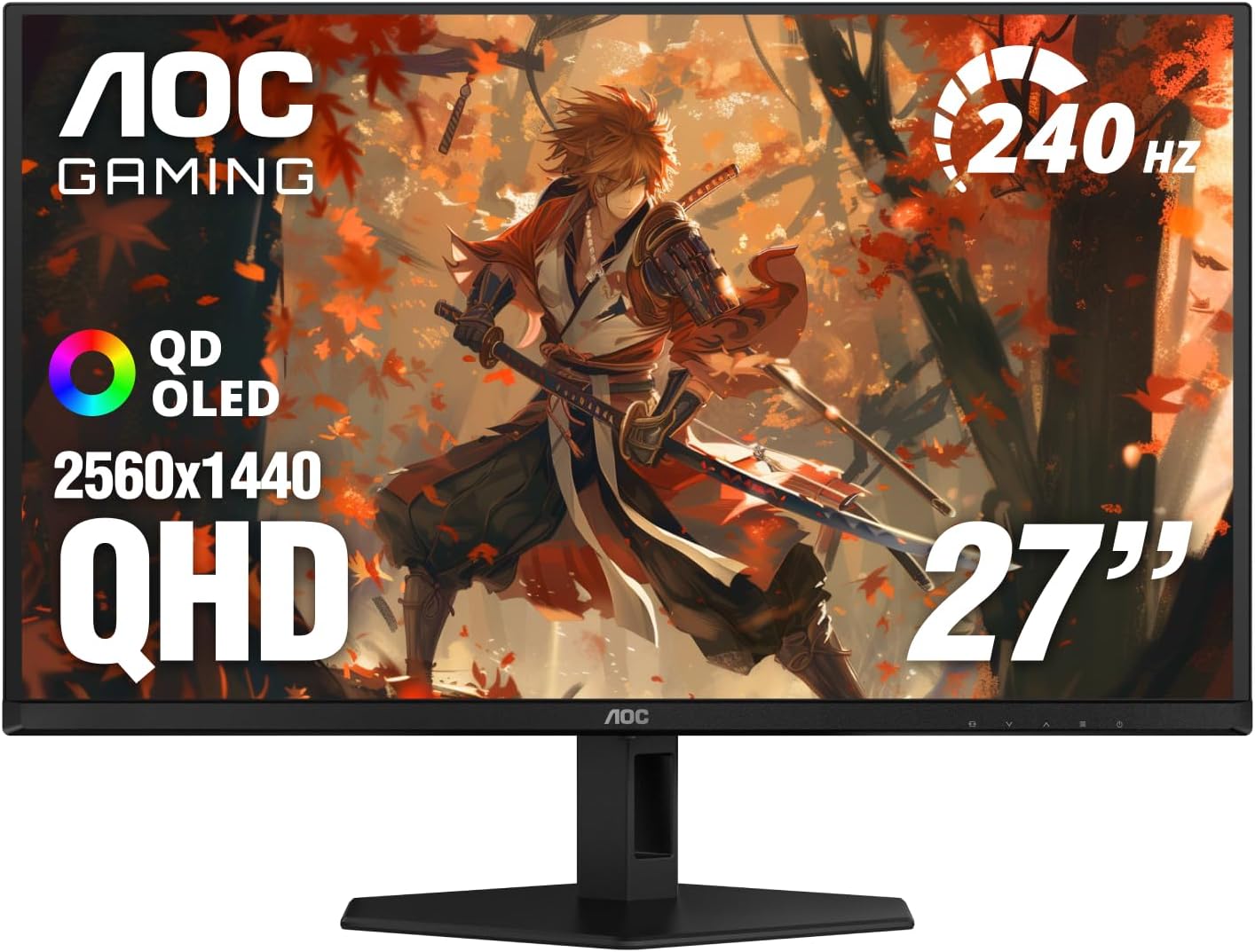
1. AOC Q27GAZD 27″ QD OLED Gaming Monitor
- Brand: AOC
- Manufacturer: AOC
Overview: The Q27GAZD from AOC sits at the budget end of the OLED 27-inch gaming segment, offering QHD resolution at 240 Hz with a 0.03 ms GtG response and HDR400 True Black. Its QD-OLED panel targets rich color reproduction with 147.6% sRGB and 110.2% DCI-P3 coverage, paired with Adaptive-Sync and a compact 27-inch footprint. The inclusion of a single HDMI 2.0 and DisplayPort 1.4 input keeps connectivity straightforward for PC and compatible consoles, and the 3-Year Zero-Bright-Dot warranty adds a practical reliability incentive for buyers mindful of burn-in risk.
Performance is where the Q27GAZD distances itself from entry-level IPS displays. The 240 Hz panel delivers extremely fluid motion, and the 0.03 ms GTG minimizes ghosting during fast action. HDR400 True Black improves contrast in dark scenes, though peak brightness remains modest by modern HDR standards, which is typical for OLED-focused gaming panels. The gloss finish can enhance perceived vibrancy but may introduce reflections in bright rooms; users outdoors or in bright setups should consider ambient lighting. The monitor’s color accuracy benefits from the QD-OLED stack, yet the panel’s white-window brightness and potential image persistence are mitigated by the 3-year warranty and Adaptive-Sync guarantees.
Pros
- Budget-friendly entry into QD-OLED with high refresh rate
- Excellent color volume and deep blacks from QD-OLED
- HDR400 True Black improves dark scene detail
- Adaptive-Sync with G-SYNC compatibility
- 3-Year Zero-Bright-Dot warranty
Cons
- Peak brightness is limited relative to high-end HDR displays
- Glossy panel surface may cause reflections in bright rooms
- Only HDMI 2.0 x1 and DP x1 limits multi-device flexibility
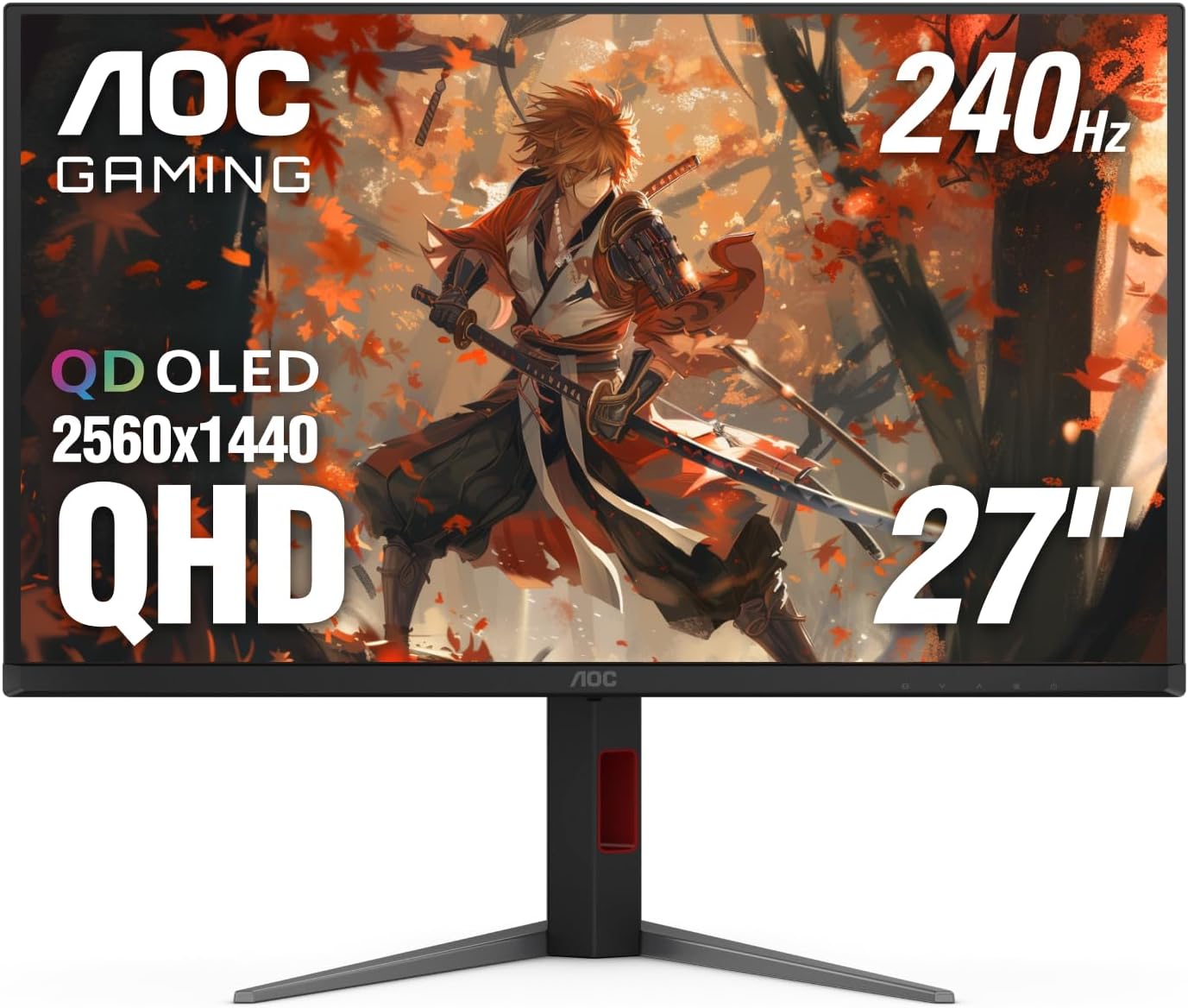
2. AOC Q27G4ZD 27″ QD OLED Gaming Monitor
- Brand: AOC
- Manufacturer: AOC
Overview: The Q27G4ZD expands on the budget formula with a larger connectivity footprint (HDMI 2.0 x2 and DP x2) and similar performance metrics to the Q27GAZD: 240 Hz, 0.03 ms GTG, and a 27-inch QHD OLED panel delivering strong color and contrast with HDR10 support. It emphasizes console compatibility with up to 120 Hz performance on supported consoles, and the 2x HDMI/DP configuration improves versatility for multi-device setups while retaining the same 3-Year Zero-Bright-Dot protection.
In practice, the dual-port input arrangement helps when you want to game from PC and a console without constantly swapping cables. The OLED panel delivers rapid pixel transitions for competitive gaming, with HDR10 enhancing mid-to-bright scene highlights. However, the brightness ceiling and potential burn-in cautions align with the category’s trade-offs; AOC’s approach remains to balance speed with durability features. The panel’s glossy finish, combined with a relatively light chassis, makes it a compelling desktop monitor for gamers who value speed and color fidelity at a reasonable price point.
Pros
- Higher port density (HDMI/DP) enables easier multi-device use
- Same blistering 240 Hz and 0.03 ms response
- HDR10 support with excellent color gamut
- G-SYNC Compatible, adaptive sync for tear-free gaming
- 3-Year Zero-Bright-Dot protection
Cons
- Still limited peak brightness versus non-OLED HDR monitors
- Glossy surface can reflect ambient light
- Some users may encounter burn-in resistance concerns with OLEDs
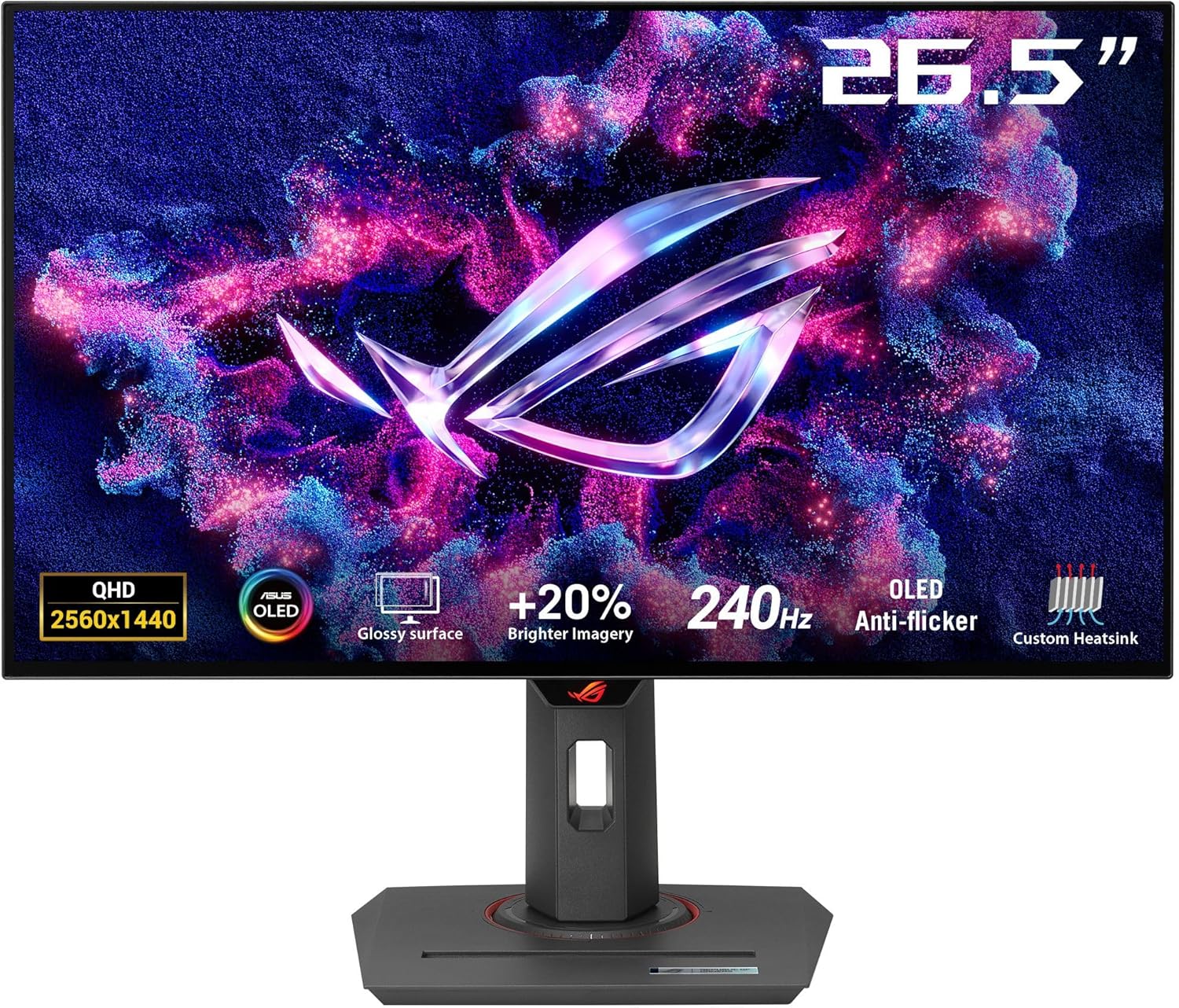
3. ASUS ROG Strix 27” 1440P OLED Gaming Monitor (XG27AQDMG) – QHD
- Brand: ASUS
- Manufacturer: ASUS
Overview: ASUS’s XG27AQDMG represents a premium take on 26.5-inch QHD OLED with a dedicated heatsink, anti-flicker technology, and Uniform Brightness mode. The panel runs at 240 Hz with a tight 0.03 ms response, and includes third-generation WOLED technology to improve motion clarity and white-window brightness. A notable feature is the optional uniform brightness setting and ASUS OLED Care to mitigate burn-in risk, complemented by a 3-year warranty and a bundled Adobe Creative Cloud bonus that broadens its appeal to creators as well as gamers.
In real-world use, the heatsink design helps manage OLED’s thermal load during sustained gaming sessions, enabling more consistent luminance and reducing the risk of uneven brightness over time. The DisplayWidget ecosystem and ROG software offer granular control over color profiles and brightness safeguards. While burn-in risk cannot be eliminated, ASUS’s approach—combined with a glossy panel and strong color accuracy (99% DCI-P3)—helps justify the premium for enthusiasts who value long-term panel health and a refined aesthetic in a high-refresh-rate package.
Pros
- Premium heatsink and thermal design for sustained gaming
- ROG OLED Care and anti-flicker for longevity
- Uniform Brightness option improves consistency
- High color accuracy with 99% DCI-P3
- Bundled Adobe Creative Cloud
Cons
- Highest price in the category
- Glossy panel may glare in bright rooms
- No major brightness advantage over other OLEDs
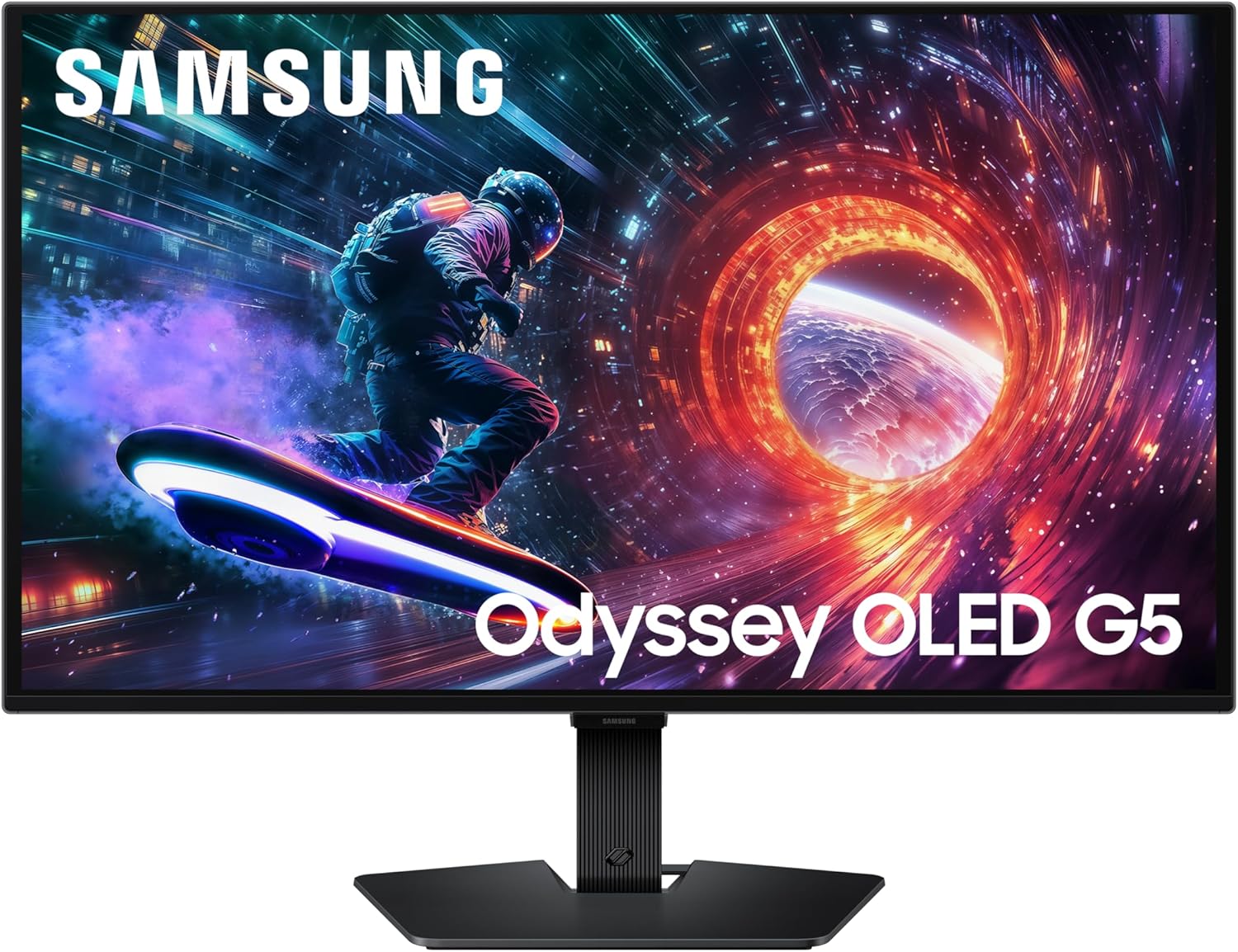
4. Samsung 27” Odyssey OLED G5 (G50SF) QHD
- Brand: Samsung
- Manufacturer: Samsung
Overview: Samsung’s Odyssey G5 G50SF brings a Samsung-branded QD-OLED experience with 27 inches and a 2560×1440 resolution, delivering 180 Hz and a 0.03 ms GTG. It uses OLED Safeguard with a Thermal Modulation System to help prevent burn-in, a glare-reducing Matte finish, and Pantone Validated color accuracy for a broad color gamut. HDR10 support provides a wide range of brightness and contrast, while the Auto Source Switch+ feature simplifies device switching, appealing to gamers who use multiple consoles and PCs.
Operationally, 180 Hz is slightly less aggressive than 240 Hz peers but still highly capable for fast-tpaced titles. The combination of G-Sync Compatible and FreeSync Premium Pro ensures tear-free gameplay across GPUs, and the OLED Safeguard approach helps mitigate long-term burn-in risk—a common concern with OLED displays used for extended gaming. The G5’s lighter chassis and matte surface improve portability between setups, though brightness peaks are typically lower than non-OLED HDR panels, making it best suited for controlled lighting environments where deep blacks and color punch shine.
Pros
- OLED Safeguard with Thermal Modulation
- G-Sync Compatible and FreeSync Premium Pro
- Pantone Validated color accuracy
- Auto Source Switch+ for seamless device switching
- Matte finish reduces glare
Cons
- Max 180 Hz vs 240 Hz on rivals
- Brightness ceiling may lag behind high-end HDR displays
- Cooling features add complexity and potential cost
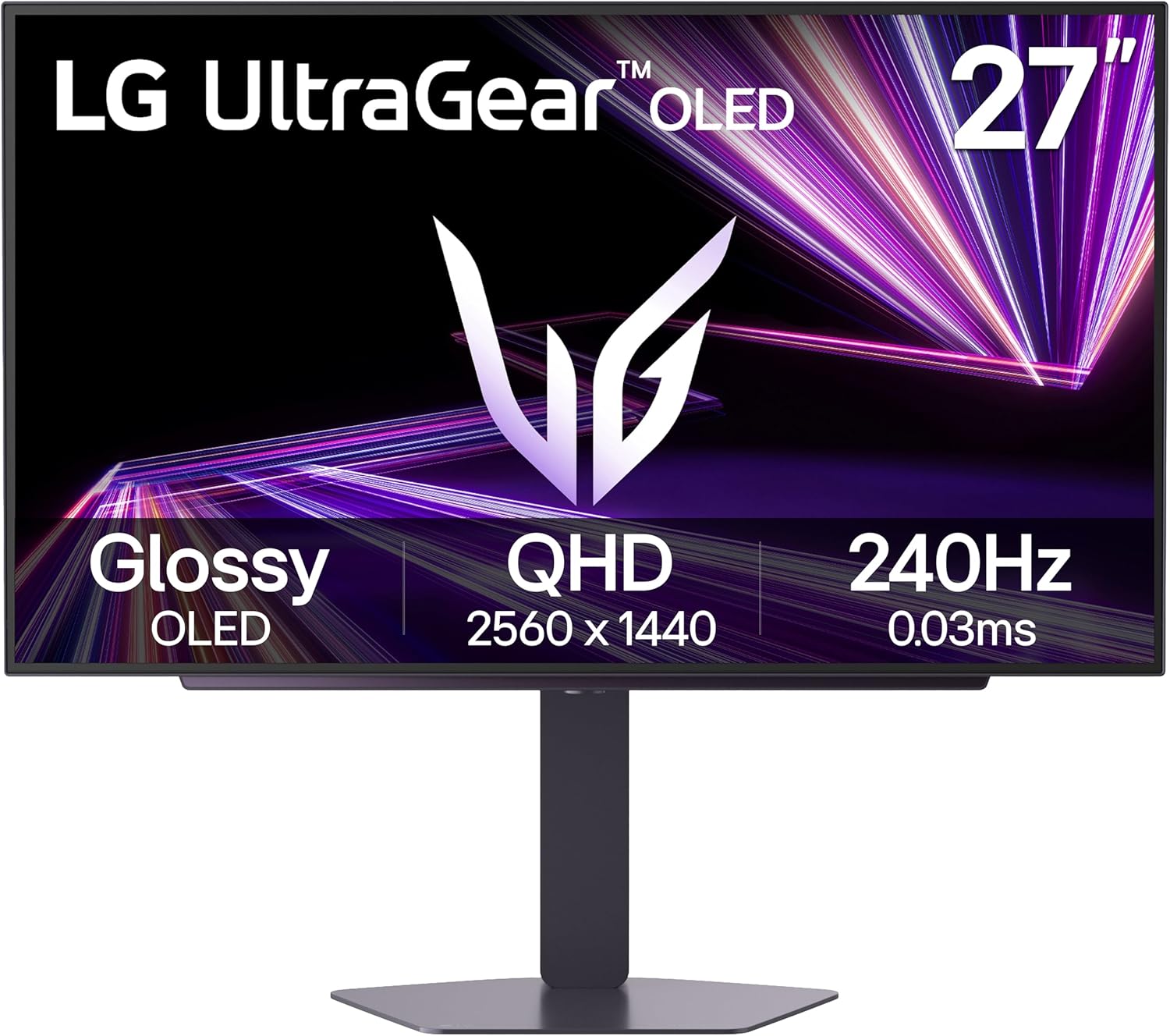
5. LG 27GX704A-B 27-inch Ultragear QHD (2650×1440) OLED Gaming Monitor 240Hz
- Brand: LG
- Manufacturer: LG
Overview: LG’s 27GX704A-B Ultragear adopts a glossy 27-inch QHD OLED panel with 240 Hz and 0.03 ms GTG, including NVIDIA G-SYNC Compatible and AMD FreeSync Premium Pro. It touts VESA DisplayHDR True Black 400 and a very robust color spec with up to 98.5% DCI-P3. The monitor supports HDMI 2.1 and DisplayPort, USB 3.2, and a refined stand with full ergonomic adjustability, along with eye-comfort certifications (anti-glare, flicker-free, low blue light). OLEDCare features help manage burn-in risk with automated pixel care cycles.
In practice, LG’s panel combines aggressive speed with high color fidelity and strong HDR handling for a gaming-centric experience. The 1300 nits peak brightness claim is competitive for OLED, delivering punchy highlights in HDR scenes. The anti-glare and low blue light certifications offer practical benefits for long sessions. The 27GX704A-B’s stand and user interface are geared toward enthusiasts who want maximum configurability, though some may find the glossy panel and compact bezels to be highly visually appealing at the expense of modest power efficiency in bright rooms.
Pros
- High 240 Hz and 0.03 ms response
- VESA DisplayHDR True Black 400 with high contrast
- Broad I/O including HDMI 2.1 and DP
- UL eye-care certifications and OLED protection features
- Excellent color coverage and factory validation
Cons
- Price positioned at a premium tier
- Glossy surface can reflect ambient light
- Thermal design complexity may affect long-term maintenance
Frequently Asked Questions
We’ve compiled answers to the most common questions about oled monitorss to help you make an informed decision.
Conclusion
For buyers prioritizing speed and value, AOC’s budget QD-OLEDs offer compelling motion performance at an approachable price.
If you want a pristine balance of color accuracy, burn-in protections, and creator-oriented features, ASUS XG27AQDMG stands out as the premium pick.
Samsung’s G5 provides a strong, well-rounded OLED option with effective safeguards, while LG’s 27GX704A-B delivers top-tier HDR performance and ergonomic flexibility. Your choice should align with budget, preferred panel protection strategy, and whether you value multi-device connectivity or creator-friendly software ecosystems..