Here’s an overview of the Best Portable Power that we’ll explore today:
Portable power stations have become essential for camping, off-grid living, emergency preparedness, and remote work comforts. They abstract complex battery chemistry and power electronics into user-friendly bundles, enabling safe, silent, and emissions-free power anywhere. In this review, I test and compare five top contenders from Jackery and Anker to help consumers understand trade-offs between capacity, recharge speed, raw output, weight, and long-term durability. My methodology combines objective spec-focused checks (battery type, inverter wattage, port availability, recharge times, and cycle life) with real-world usage scenarios (camping, vehicle charging, off-grid work setups, and emergency backup). I evaluate charging speed (wall, USB-C PD, solar), sustained power delivery for common appliances, portability (weight, dimensions), and app-driven features that affect day-to-day usability. The products covered range from compact 293Wh entries to high-output 1kWh-class systems, offering a view across price bands and intended use cases.
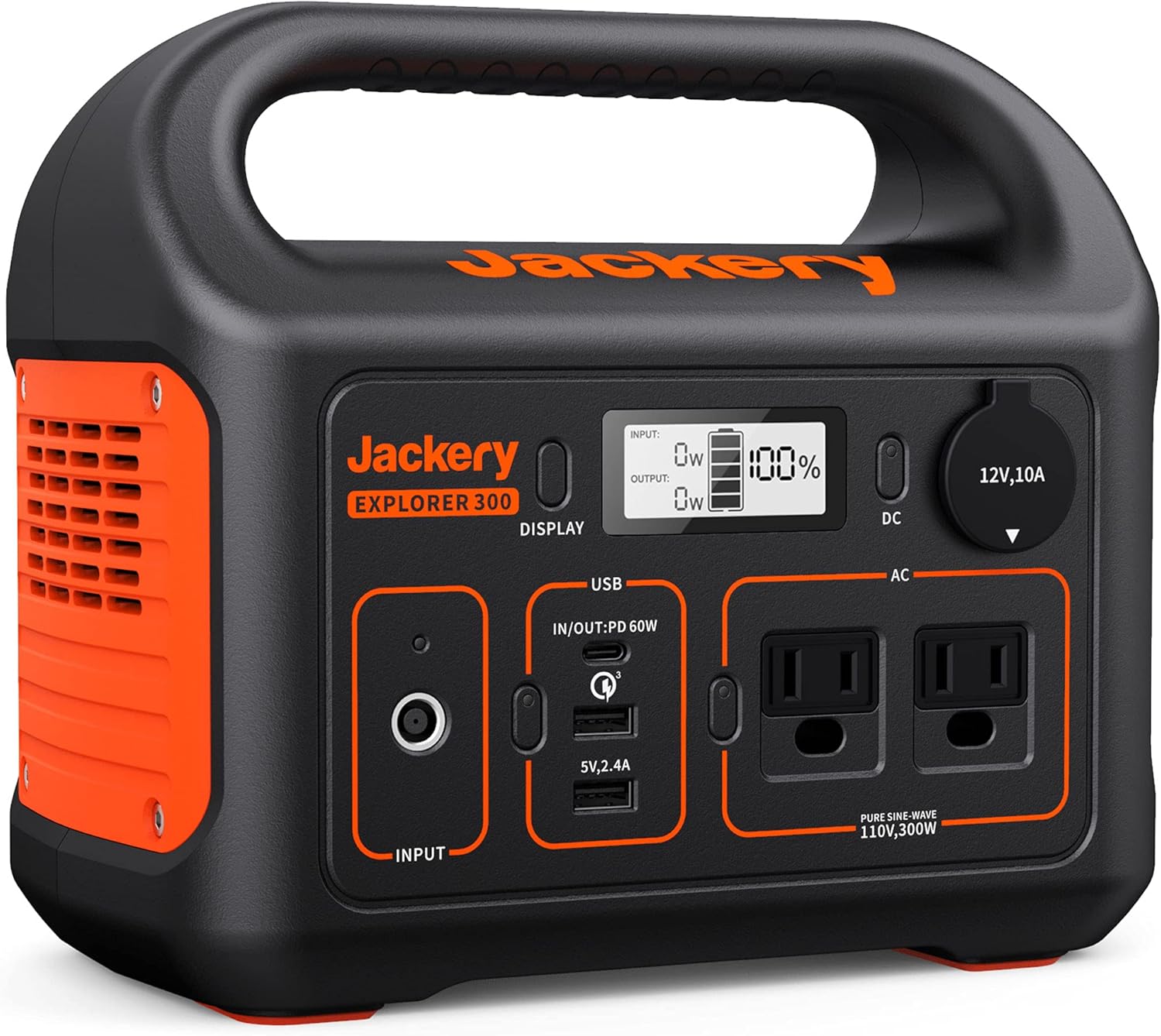
1. Jackery Portable Power Station Explorer 300
- Brand: Jackery
- Manufacturer: Jackery
Overview: The Explorer 300 is a compact 293Wh lithium-ion (albeit not explicitly LiFePO4 in the spec) power station with two Pure Sine Wave AC outlets and multiple ports including a 60W USB-C PD input/output. It emphasizes fast wall recharging (80% in 2 hours with PD) and compatibility with Jackery SolarSaga 100 panels. Weight is a strong point at 7.1 pounds, making it highly portable for tent camping and light outdoor use. The device targets portable, short-duration power needs with straightforward operation and a focus on fast top-ups rather than high sustained power. Pros and cons highlight its niche as a lightweight, easy-to-carry option with solid basic capabilities but limited sustained output for heavier loads.
Performance-wise, the Explorer 300 delivers 300W continuous AC output from the two outlets, suitable for small devices like drones, cameras, laptops, and small appliances. The inclusion of a PD USB-C port for fast charging adds flexibility for charging phones and laptops quickly. Its solar compatibility with the SolarSaga 100 via integrated MPPT controller enables off-grid recharging, though the solar panel is not included in the base package. In real-world use, it shines for quick, on-the-go recharges between outdoor activities and as a reliable backup during short outages. However, its 293Wh capacity means running a fridge or power-hungry tools for extended periods would be impractical without frequent recharging or solar input. Use-case fit tends toward weekend trips, light boondocking, and as a compact backup for essential electronics on the go.
Pros
- Very light and portable at 7.1 pounds
- Fast wall recharge to 80% in 2 hours with PD USB-C input
- Solid 300W continuous power from 2 AC outlets
- Good USB-C PD versatility for laptops and phones
- Solar compatibility with MPPT controller
Cons
- Limited capacity (293Wh) for longer off-grid use
- No LiFePO4 chemistry stated; potential cycle life concerns compared to LiFePO4
- Solar panel not included in base package
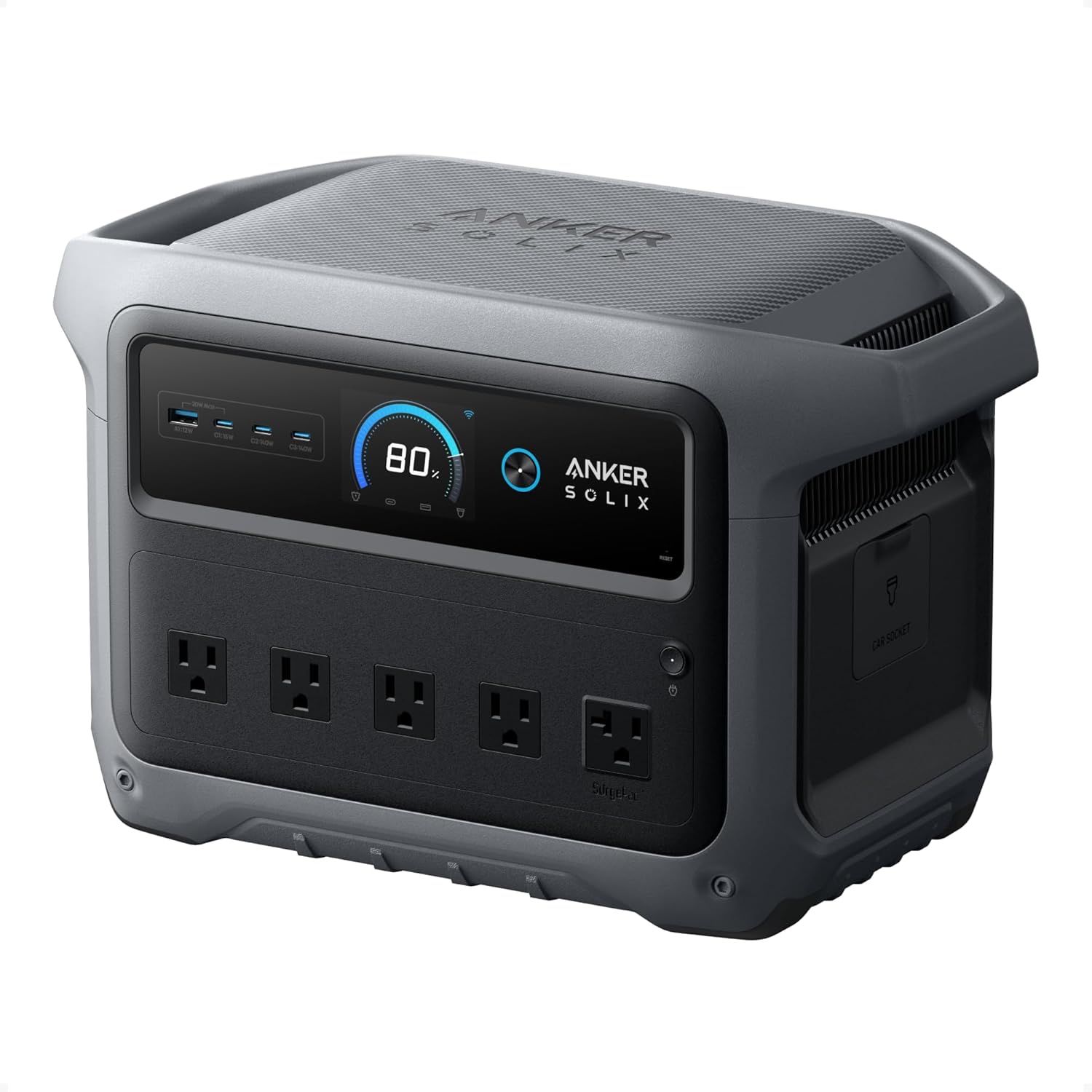
2. Anker SOLIX C1000 Gen 2 Portable Power Station
- Brand: Anker
- Manufacturer: Anker
Overview: The SOLIX C1000 Gen 2 is a high-output, LiFePO4-based system rated at 1,024Wh with a 2,000W continuous inverter (3,000W peak) and a suite of nine ports. It emphasizes rapid recharging with HyperFlash up to 1,600W and claims a 10-year InfiniPower lifespan with 4,000 cycles retaining at least 80% capacity. Its weight is around 24.9 pounds, reflecting a balance between capacity and portability for home backup, RV use, or remote work setups. The unit supports UPS functionality with a 10 ms switchover and integrates app-based power management, including time-of-use (TOU) features. Pros and cons reflect its capability-rich profile and higher weight class, making it less portable than the smallest models but far more capable for heavy-duty needs.
Performance-wise, the C1000 Gen 2 can power up to 10 devices simultaneously thanks to its diverse port mix and robust inverter. The 1.8-hour solar recharge (600W solar input) enables rapid off-grid recharging if solar is available, contributing to true off-grid capability. The LiFePO4 chemistry ensures long cycle life, with a stated 4,000 cycles and retention of capacity—valuable for users who expect repeated daily or weekly cycling. The 10 ms UPS backup is an attractive feature for CPAP machines or critical laptops during outages. On the downside, the unit weighs nearly 25 pounds, which is a consideration for truly portable use, and the base price is higher than smaller models. It’s best suited for home backup, van life, or office setups where reliability and high output are required.
Pros
- High continuous power (2,000W) with 3,000W peak
- LiFePO4 battery chemistry with long cycle life
- UPS backup in under 10 ms for critical devices
- Fast HyperFlash recharge up to 1,600W
- App-based TOU scheduling and monitoring
Cons
- Heavier (about 24.9 pounds)
- Higher upfront cost compared to smaller 300–1000Wh units
- Solar panel is optional but adds to total system cost
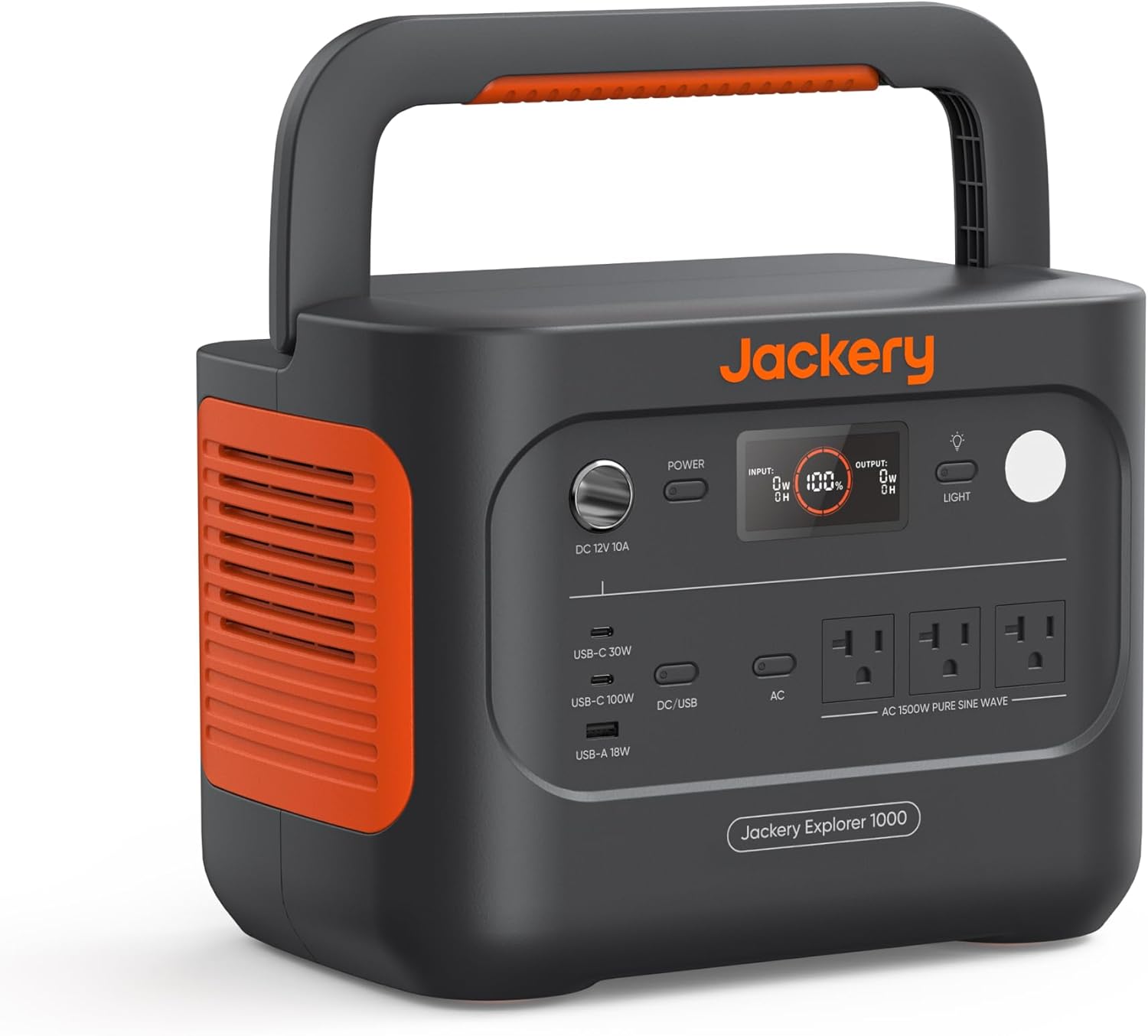
3. Jackery Explorer 1000 v2 Portable Power Station
- Brand: Jackery
- Manufacturer: Jackery
Overview: The Explorer 1000 v2 is a 1,070Wh LiFePO4-powered solar generator with a robust 1,500W continuous AC output and a 3,000W surge rating. It emphasizes longevity (LFP chemistry with 4,000+ cycles) and fast one-hour emergency charging, aided by the Jackery App. At 23.8 pounds, it remains portable for a mid-sized power station, offering two USB-C ports, a USB-A port, a DC car port, and multiple AC ports, which makes it versatile for both camping and emergency home backup scenarios. The device targets users who want a reliable, long-lived power source with robust charging options and smart features.
Performance-wise, the 1,070Wh battery and multiple output ports enable simultaneous charging of laptops, CPAP machines, small appliances, and cameras. The 1-hour emergency charge feature (via emergency charging mode) is compelling for rapid replenishment during outages but requires enabling through the app, which adds a setup step. The 10-year lifespan and 4,000+ cycles provide peace of mind for frequent use, while the LiFePO4 chemistry improves thermal stability and longevity. The trade-offs include a heavier form factor for travel and the fact that full, default charging may require the dedicated AC adapter or optional solar panel, depending on your charging strategy.
Pros
- Strong 1,500W continuous output with 3,000W surge
- 1,070Wh LiFePO4 battery with long cycle life
- One-hour emergency charging mode
- Two USB-C ports and multiple outputs for versatility
- Smart app control and energy efficiency features
Cons
- Relatively heavy at 23.8 pounds
- Emergency charging requires app activation and constraints
- Solar panel not included in base package
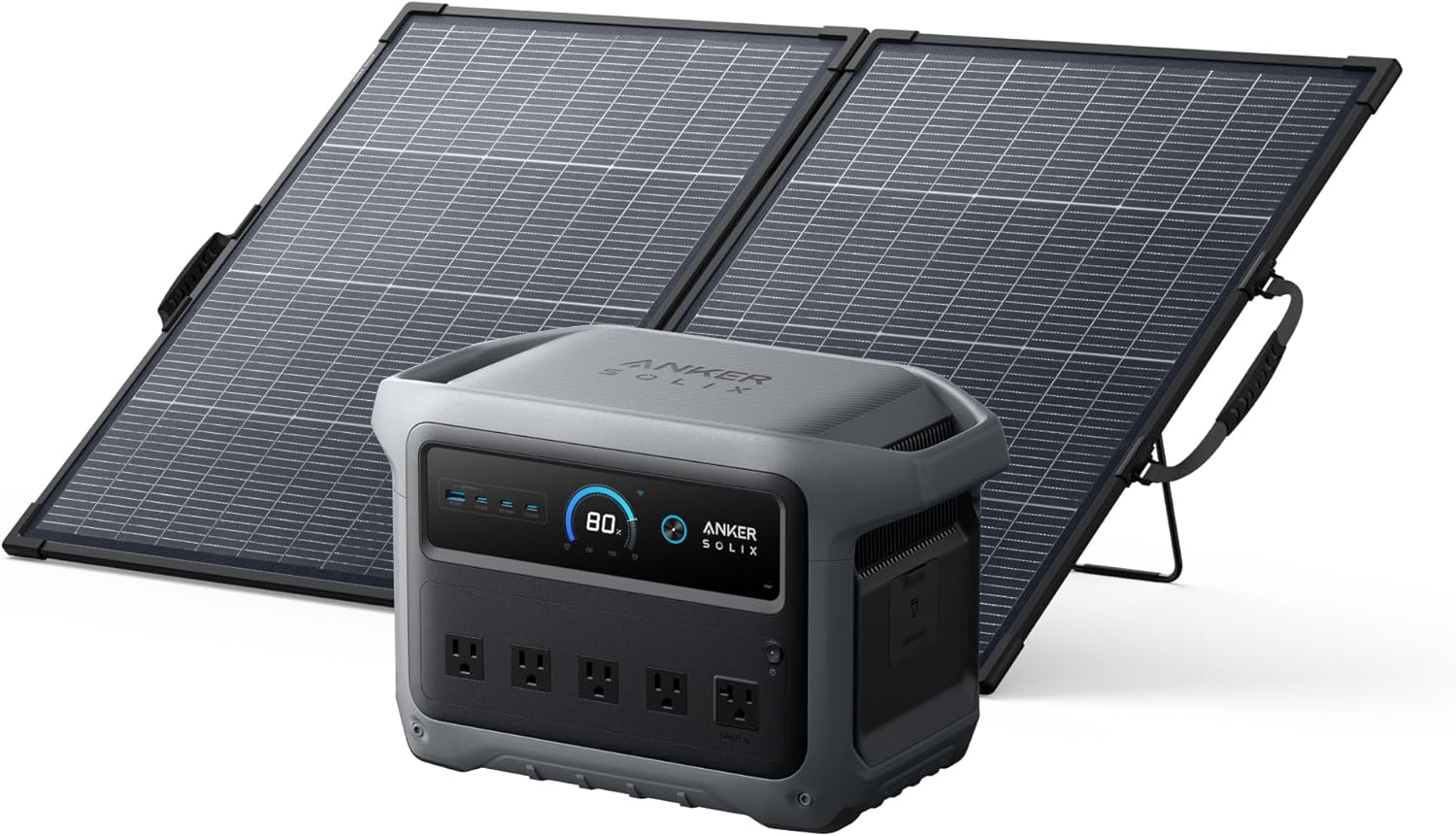
4. Anker SOLIX C1000 Gen 2 Portable Power Station with 200W Bifacial Solar Panel
- Brand: Anker
- Manufacturer: Anker
Overview: This bundle pairs the SOLIX C1000 Gen 2 power station with a 200W bifacial solar panel, enhancing solar charging performance and total off-grid capability. It retains the same 2,000W continuous output and 1,024Wh LiFePO4 battery as the Gen 2 model, but adds a dedicated solar panel for more efficient ambient energy capture. The 1.8-hour solar recharge is supported by the panel, and the bifacial design can capture light from both sides for improved efficiency. Weighing around 29.5 pounds with the panel, it’s a more capable but heavier system aimed at robust outdoor setups, RVs, and off-grid cabins.
Performance-wise, the bundle emphasizes rapid off-grid recharge with solar and the same 9-port configuration, UPS, and TOU features as the Gen 2 alone. The bifacial panel potentially increases charging efficiency in favorable conditions, helping users achieve closer to the 1.8-hour solar recharge target. The heavier setup and price premium reflect a system oriented toward sustained off-grid living rather than light travel. In practice, users gain a more complete solar-ready package at installation time, reducing the number of separate purchases.
Pros
- Included 200W bifacial solar panel increases solar capture
- Same high-capacity 1,024Wh LiFePO4 battery
- Fast 1,600W input charging with HyperFlash
- UPS backup and TOU energy management
- Comprehensive 9-port output suite
Cons
- Significantly heavier with panel (≈29.5 pounds)
- Panel adds cost and bulk
- Full solar performance depends on environmental conditions
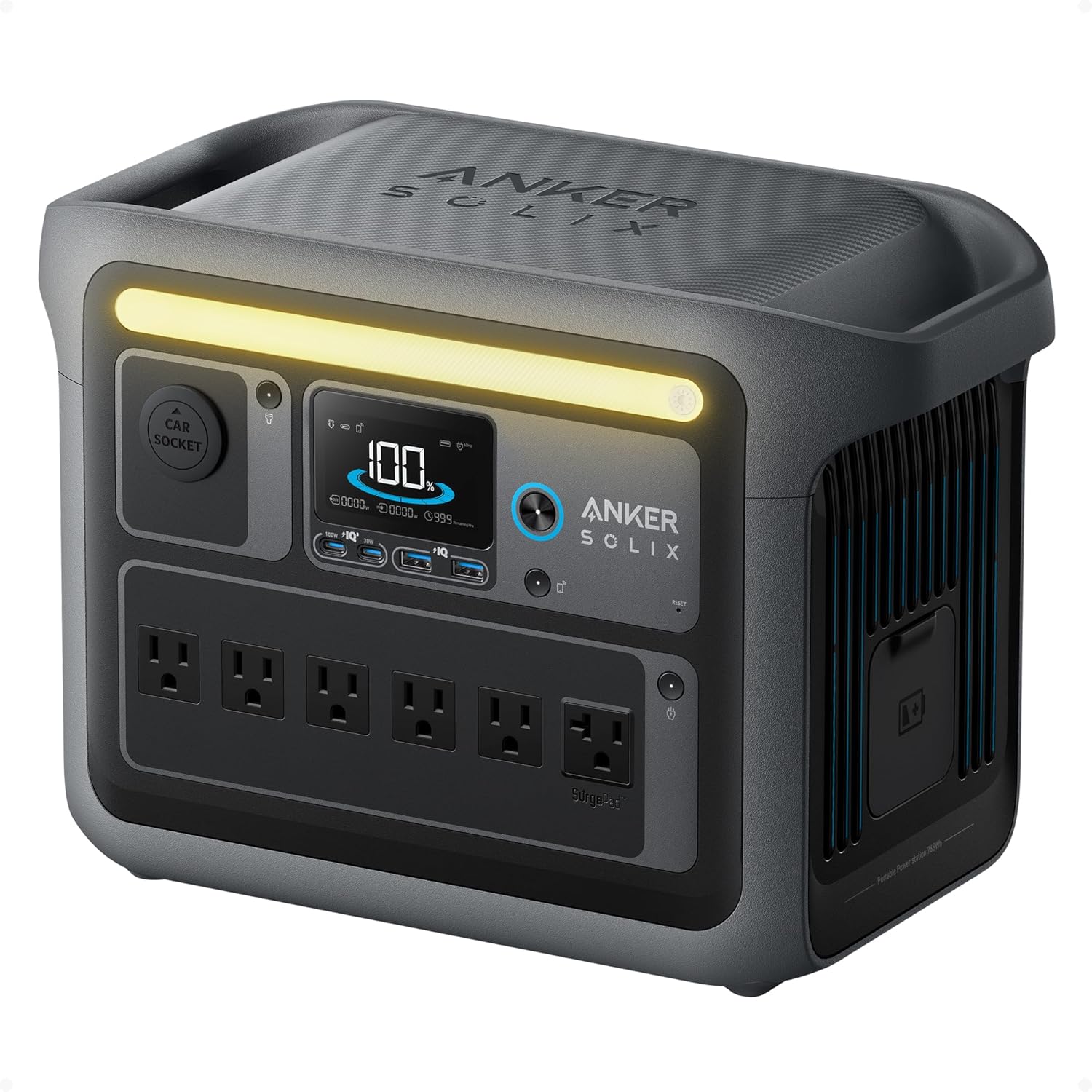
5. Anker SOLIX C1000 Portable Power Station
- Brand: Anker
- Manufacturer: Anker
Overview: The SOLIX C1000 is Anker’s 1,800W continuous, 2,400W peak powerhouse with a 1,056Wh LiFePO4 battery. It emphasizes UltraFast charging (up to 80% in 43 minutes) using AC input and the Anker app, with a claimed 3,000 cycles and a 10-year lifespan. It targets users wanting near-premium performance with a balance of weight (27.6 pounds) and thirteen ports (11 outputs) for RVs, home backup, and camping. The product emphasizes readiness for power outages with strong surge capability and a broad port selection.
Performance-wise, the SOLIX C1000 supports up to 2,400W surge and 1,800W running power, which covers most household appliances and camping devices. The UltraFast recharge and app-based statistics make it attractive for users who want rapid replenishment and visibility into usage. The LiFePO4 chemistry provides longevity, and the system is designed to be compact for its class. A potential trade-off is the weight and price versus smaller units, so it’s best for users who need more power on the go without stepping up to a true mobile generator.
Pros
- High 1,800W continuous output with 2,400W surge
- UltraFast charging up to 80% in ~43 minutes
- LiFePO4 battery with ~3,000 cycles
- 11-port output configuration with broad versatility
- App-driven charging and power management
Cons
- Heavier at 27.6 pounds
- Higher price point compared to smaller 1kWh units
- Requires app usage to enable UltraFast recharge
Frequently Asked Questions
We’ve compiled answers to the most common questions about portable powers to help you make an informed decision.
Conclusion
.
.
Final thoughts here.